
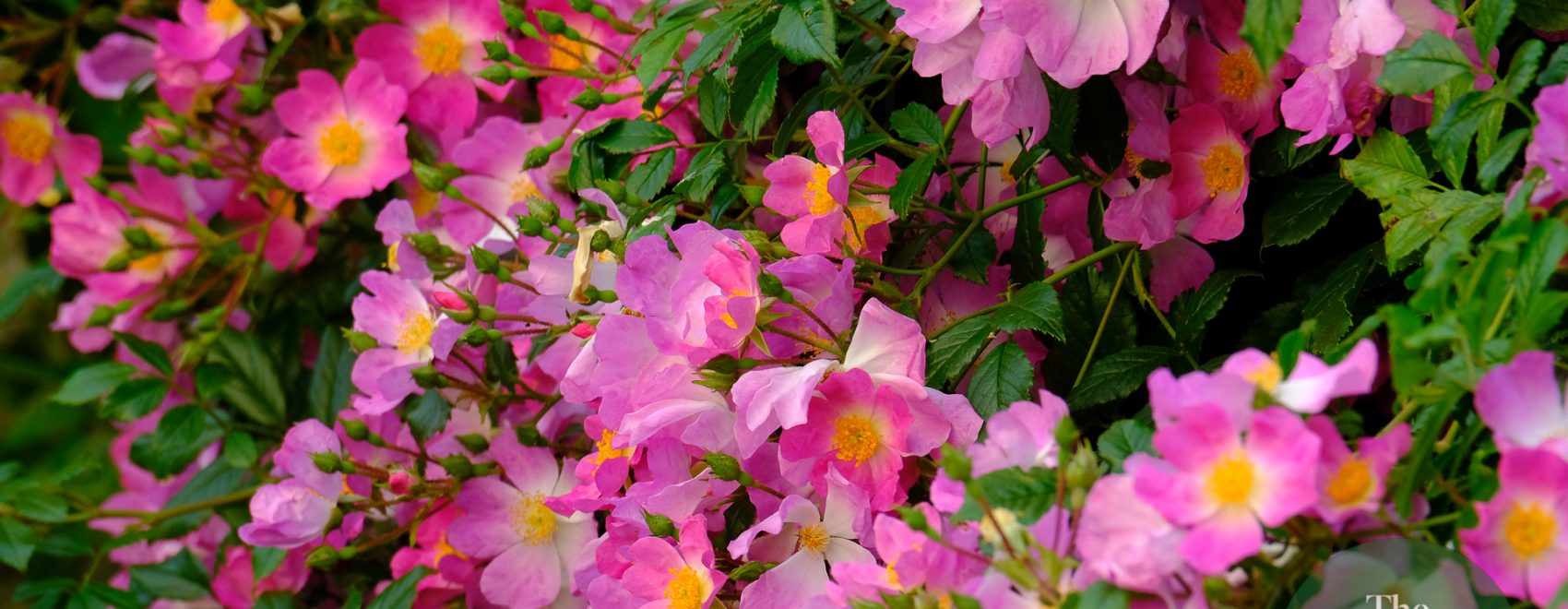
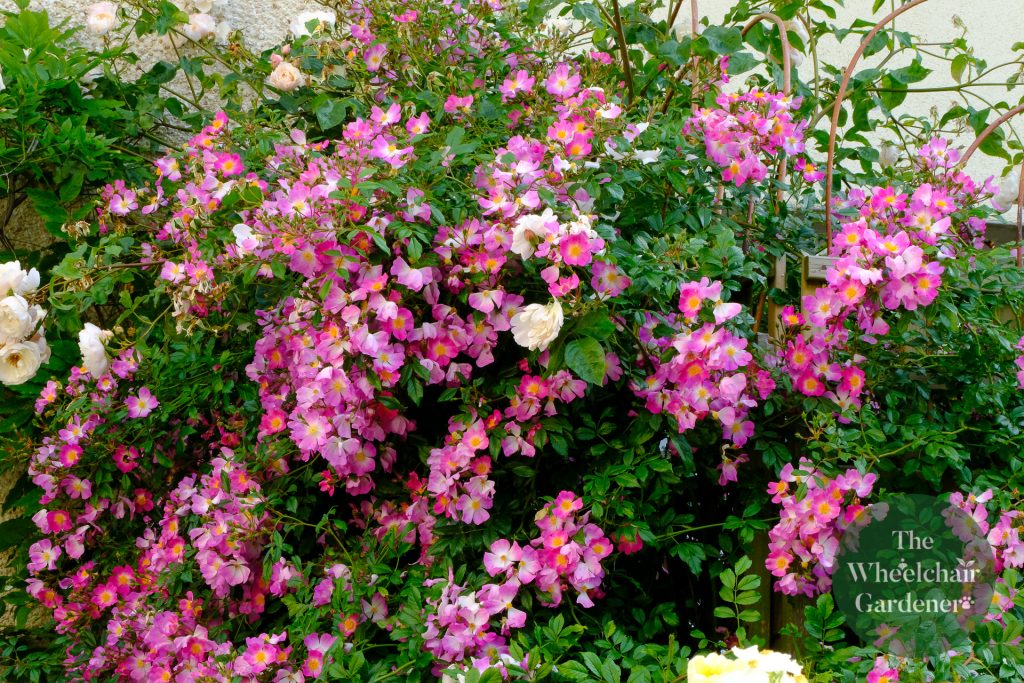
Outside my front door, on the corner of the south facing wooden decking, there’s a fragrant lemon sorbet scented cultivar dog rose, which has become well established over the past few years. It started to come into bloom about a week ago, but with the current record-breaking temperatures the flowers have appeared at record speed, increasing at an almost exponential rate. I was sitting outside yesterday, drinking a mid-morning coffee as the temperatures soared and I could see the profusion of blooms weighing down the prickly woody stems and wilting, almost like a melting wax candle.
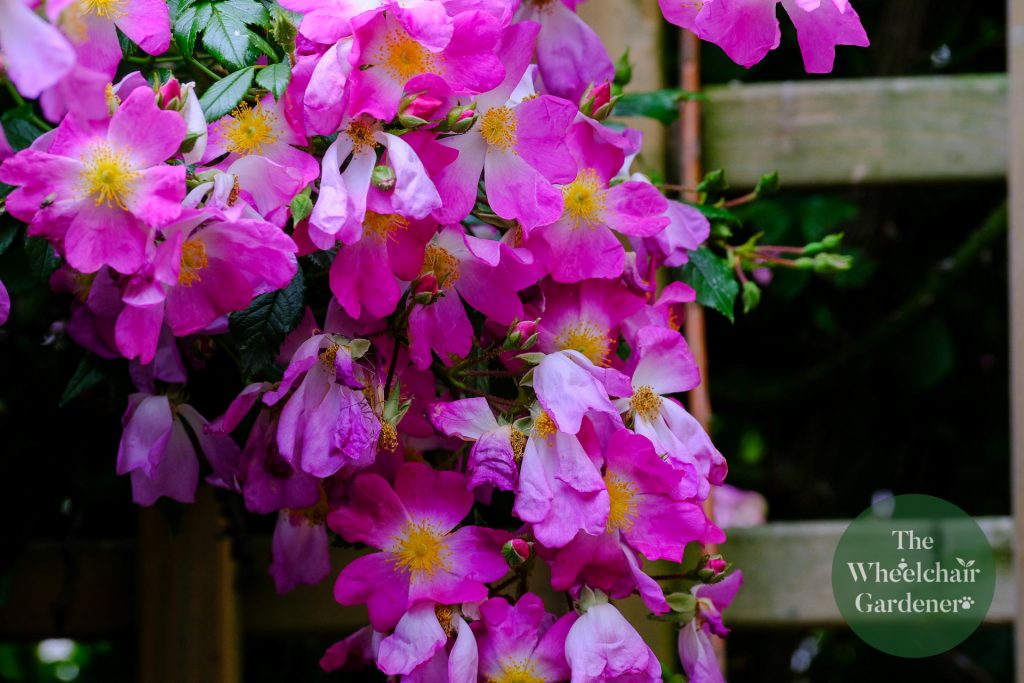
The ground is now so dry there’s no moisture to evaporate into the atmosphere to help moderate the heat. The temperate Welsh climate is now experiencing temperatures similar to those in southern Europe and the plants here are not well adapted. Plants that gardeners in these climes tend to grow have largely been chosen and selected for warm, mild, damp summers and relatively mild winters and they struggle to cope with the heat and water stress so far outside their normal parameters. It is equivalent to putting a walrus in the Sahara. It might survive for a while but certainly not for long.
Once you start to open your eyes to understand what is happening, these signs become more apparent and visible. So many people associate the blue skies, sunshine and heat as ‘good’, fine weather that is to be enjoyed, and summer holidays have come to be associated with flying off to warmer sunnier climes, deriding this green and pleasant land as wet, grey and cold. Just another typical miserable soggy summer to be avoided and moaned about.
When hot weather arrives on our isles, many people see it as a reason to celebrate, which in a sense it is, but much of the plant and other wildlife around us has not evolved to cope with the intense extremes that we’re now experiencing. Much of the media report this with pictures and stories showing unbridled joyous abandon; azure blue skies, sandy beaches full of happy families building sand castles whilst sucking on ice cream cones alongside tranquil turquoise seas.
Most people simply don’t understand that an average of 1.5 degrees Centigrade increase in global climate temperatures does not mean just that little bit warmer. An average is simply an average, but the extremes become far more extreme, the temperature range is much greater and it is these extremes on each end of the range, hot and cold, wet and dry, often unpredictable, that are causing the damage and disturbing a balance established over thousands of years. Temperatures in the natural world tend to act exponentially whilst our minds to think incrementally. The temperate conditions for comfortable human existence are sliding into those increasingly intemperate.
That rose, which would normally remain in bloom for weeks offering nectar for a range of pollinating insects, will quickly reach a climax and wilt in a few days, so that the whole flowering period has been compressed into a fraction of its normal length and is demonstrating to us in real time the effects of this extreme hot weather. Whilst it is in bloom the abundant display is spectacular.
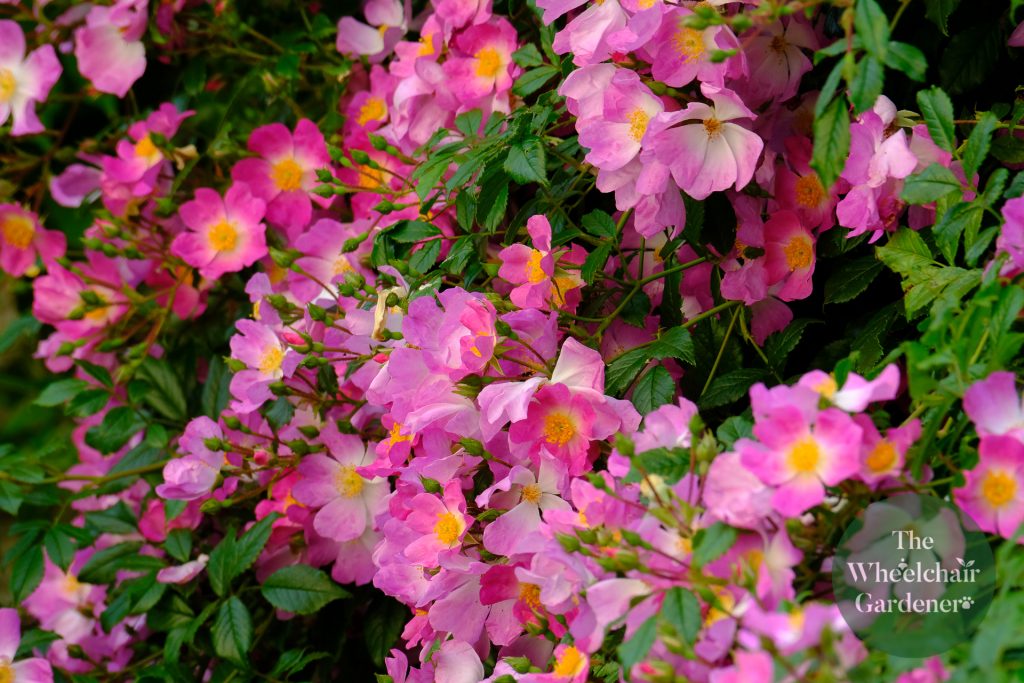
If we choose to open our eyes to examine more closely whats happening on our doorsteps, to observe these signs and take the time to shift our attention away from our mobile phone screens and the ever demanding world of the meta-verse and social media – a digitally constructed fantasy world , or the false narratives constructed by much of the main stream media – then we can start to come to terms with reality again and to comprehend the scale of the climate crisis which is happening right under our noses.