
Soil is fundamental to life and this has been reflected in human language for millenia. Early humans must have had an understanding of the life cycles of edible roots, fungi and animals found in the soil and had an appreciation that soil has physical as well as living biological properties. In the biblical book of Genesis, Adam was the first man to inhabit the Garden of Eden together with Eve. Adam is derived directly from adama, the Hebrew word for soil. It seems bizarre that has taken until the 21st century for the UK to be introducing an Agriculture Bill in 2019-20 that pays some import to, “clean air, soils and water’. https://www.gov.uk/government/news/agriculture-bill-to-boost-environment-and-food-production
The majority of gardeners understand that the soil is at the heart of a productive garden: it is the base and foundation from which healthy plants can grow. It’s a good idea to understand the nature of your soil and its properties before you decide what to grow and how to grow it. In both of the gardens that have been a part of my life during the last forty years, the soil has been the place where my efforts to start growing food and other plants has focused, but with mixed results. Temperate and tropical soils function in different ways as I have not least through experience.
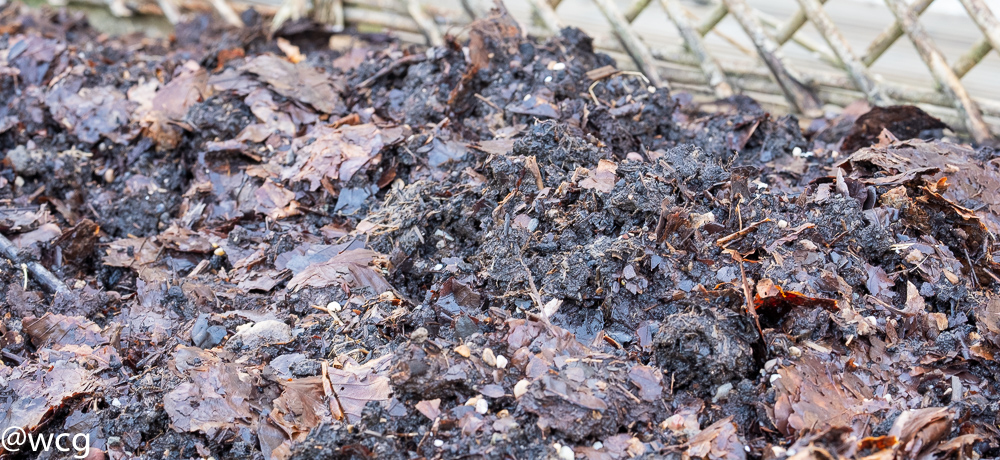
In the mid Wales garden, in its temperate environment, it is nearly three years since I finished getting the raised beds made. The time since then has been used improving the heavy clay soil that was dug out from the steep bank and shoveled into the wooden frames. Organic matter in the form of farmyard manure, leaf mulch, general compost with a bit of sand and some lime has been dug in. Today the soil is a dark friable loam, plenty of worms quickly appear when you dig under the surface and if you look more closely other life is visible, and I think I would be happy to be a vegetable putting down roots and growing there.
When I first started working on Lake Tanganyika nearly 40 years ago, the plot of land that I had discovered by canoe and where I had built my home and business, was on a hillside with rocks and a poor, infertile, sandy soil. There were no roads around the edge of the lake and this spot was uninhabited and reasonably sheltered from storms. For the first two years I lived underneath a canvas roof with walls made of reeds, whilst I concentrated the main effort at work into building fish tanks, storerooms and a jetty for the boats to shelter inside. Two other early priorities were a long-drop toilet and a vegetable garden.
To make a long-drop, a hole about eight foot deep was dug in a spot not far from my make-shift house. Some pretty large rocks had to be broken up and manhandled out of the depths. The hole was then covered with some strong tree trunks and a concrete capping with a small hole in the middle. It was topped with a concrete throne, on top of which was placed a plastic lavatory seat. Surrounding the long-drop I erected a grass wall with a viewing window to admire the scenery, and a roof which leaked during the rainy season so that you could have a crap whilst raindrops were falling on your head.

Early lake building. 
Early lake garden + long drop.
Another feature which appeared over time were the red mouse-eared bats who decided to roost inside the long drop, hanging from the tree trunks which were acting as the floor over the hole. This made life very interesting if you decided to have a dump after dark, as the bats could quite literally come flying up as you pulled your pants down. If you sat down too fast, a bat could tickle your arse!
Getting a small garden started for fresh herbs and vegetables also had its problems. I figured that since fish were in plentiful supply, if I could grow my own vegetables and fruit I could be nearly self-sufficient. The soil on the side of the hill was poor and sandy, and, like the long drop, it had a lot of rocks in it. I had a young Zambian guy who was working in the garden and he spent a lot of his time simply removing rocks to build up a patch of ground that would be suitable.
The first couple of attempts to grow some tomatoes and eggplants ended in failure and it was pretty clear that to make the garden even slightly productive I would have to try and find some decent organic matter to dig into the soil. About 40 miles away there was a farmer who was rearing cattle for beef, so I asked him if we could come one day to load up my battered old Toyota land cruiser with dried cow manure.
I set off early in the morning with Manuel the young gardener and another guy called Isaac. It was the dry season and temperatures reached past 30 C during the day. To reach the main road we had to travel in the slow wooden transport boat for just over an hour to reach the small town of Mpulungu, and from there it was another hour or so to reach the farm. The three of us spent the whole day picking up dry cow pats and chucking them into empty sacks until the land cruiser had a full load. I am pretty sure Manuel and Isaac thought it was some mad scheme and had no real idea why on earth we were spending our time in the dry dusty heat collecting cow dung.
It was late afternoon before we drove back to the lake, thirsty and hungry. We offloaded the sacks into the boat and headed back across the water, arriving home just before dark. We offloaded the bags onto the stone jetty for the night, ready to carry up the hill for the garden the next day.
When I woke up the following morning, I did other jobs before I turned my attention to the task of getting the manure to the garden. I was about to head off in the boat to catch fish when I told Manuel to get the bags of manure up the hill and leave them behind the long-drop ready to dig into the garden.
When I came back that evening everybody had knocked off work and I was pleased to see that the manure had been moved off the jetty.
It wasn’t for another day or so that I turned my attention to the job of getting the cow manure dug into the garden, so I called Manuel and we went to spread the bags out on the ground. When I went to look behind the grass wall of the long-drop there was no manure, only a whole bunch of empty plastic sacks. I looked at Manuel and asked him where the manure had gone and a look of confusion came over him as he tried to explain what had happened.
Gradually it dawned on me exactly what he was trying to explain. I went to my house and grabbed a torch which I shone down the concrete throne into the darkness to confirm my worst suspicions. Sure enough, all the bags of manure had been tipped down the long-drop! My jaw dropped and the air filled with some ripe swear words as I began to register the fate of my dung.
My Lungu (the local language) was very poor so I had explained to Manuel in English where to put the manure. His English, although it was a lot better than my Lungu, had been misunderstood. What I had meant when I had said to put it “behind” the chimbuzi (toilet), he had understood as “in”, having probably already decided in his own mind that my sanity was questionable and so all the manure had gone down the hole as instructed!
After this episode I had another brief try at growing tomatoes but gave up when tomatoes failed to appear. I went on to plant guavas, bananas, pawpaws and pineapples which was largely more successful except that the vervet monkeys would often beat me to the ripening bananas and papaya fruit.
With the benefit of hindsight it is best to get to know and understand the soil and conditions you are working with, how to work with these and then to choose the things that will grow there, rather than starting with what you want to grow. Some places can beat your best attempts to grow things. It is a question of getting your shit together and then making sure it ends up where you intended. The soil can test your time, patience and understanding in strange and mysterious ways…

Bananas, Paw Paws and Pineapples. 
Raiised beds – Wales