There is a lot of media attention now being drawn to the value of pollinators and their vital importance, which is long overdue, given the perilous state of decline which insect populations are facing not least because of all the various ways we have impacted on them. Herbicides, pesticides, habitat removal, the rapidly changing climate, changing agricultural practices are some of the main factors. So often the word ‘pollinator’ is reduced to mean butterflies and bees. Bees are then reduced to mean honeybees where there are estimated to be 267 species of bee in the UK. 90% of these are solitary they live alone not in hives and more importantly they are far more efficient pollinators because they do not carry pollen in pollen baskets: on their legs, instead they spill lots which means they pollinate more flowers and plants.
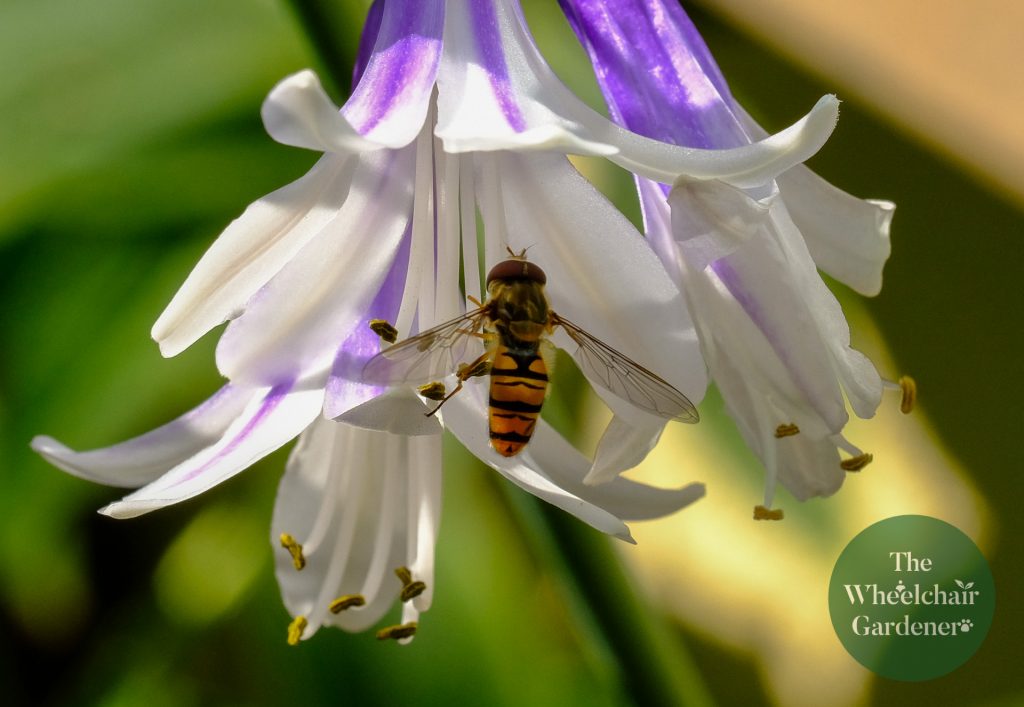
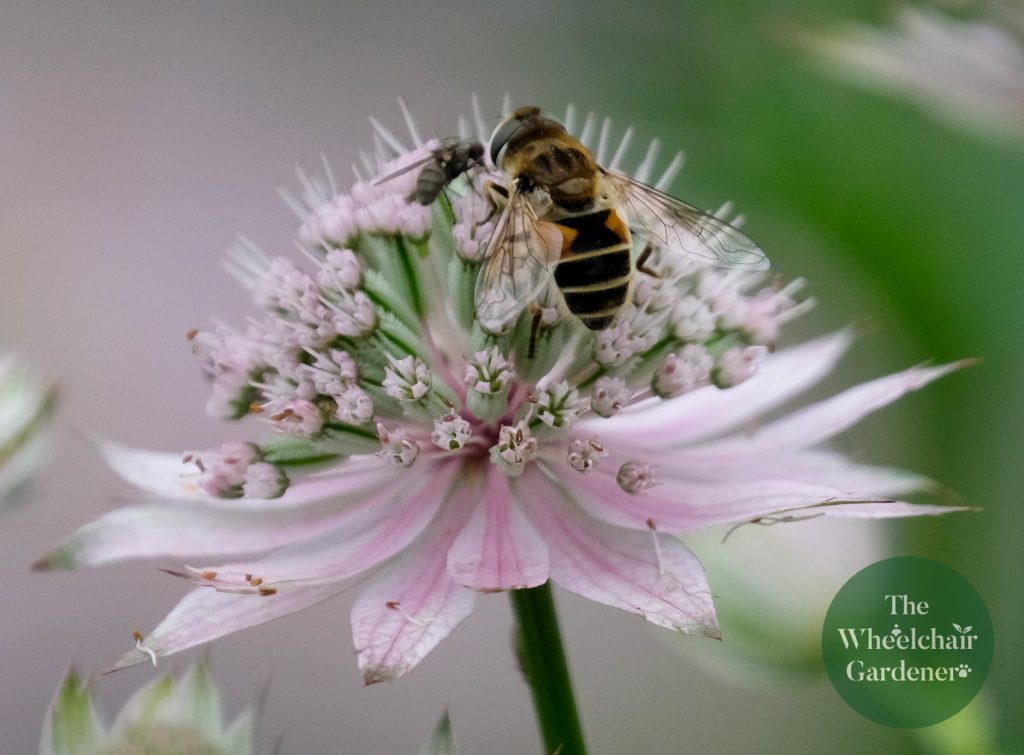
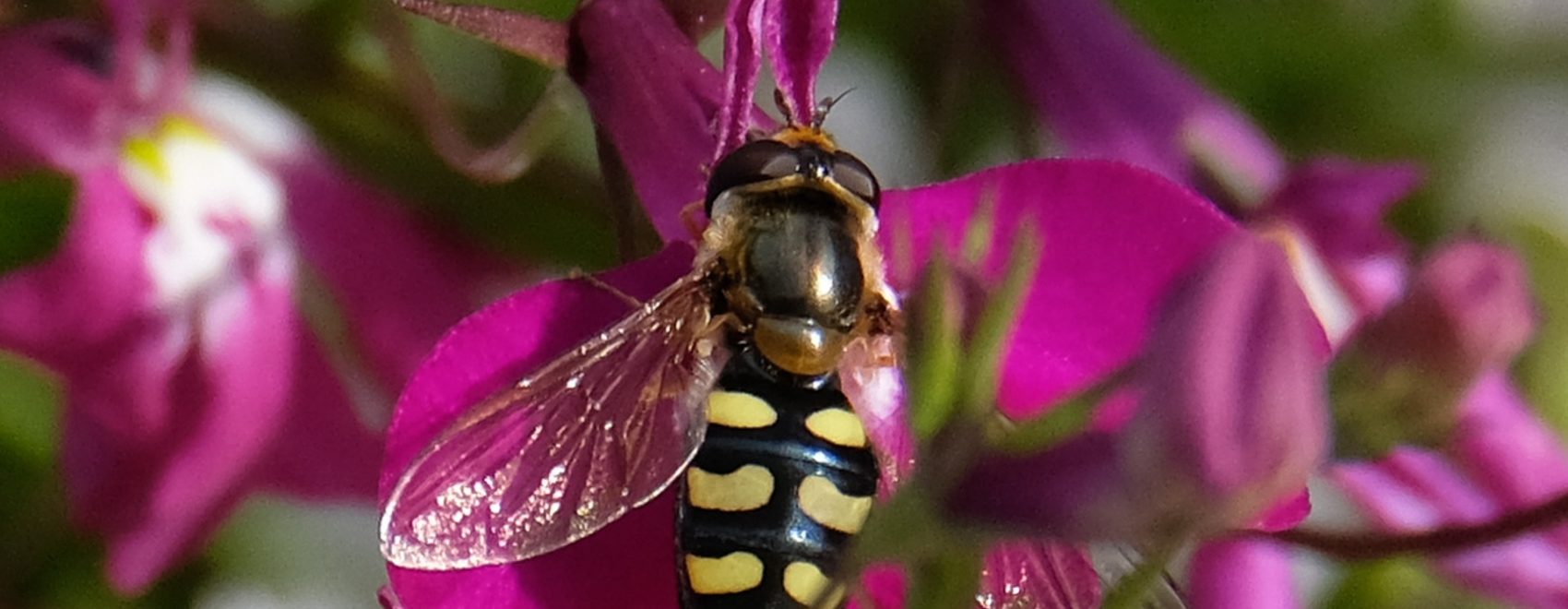
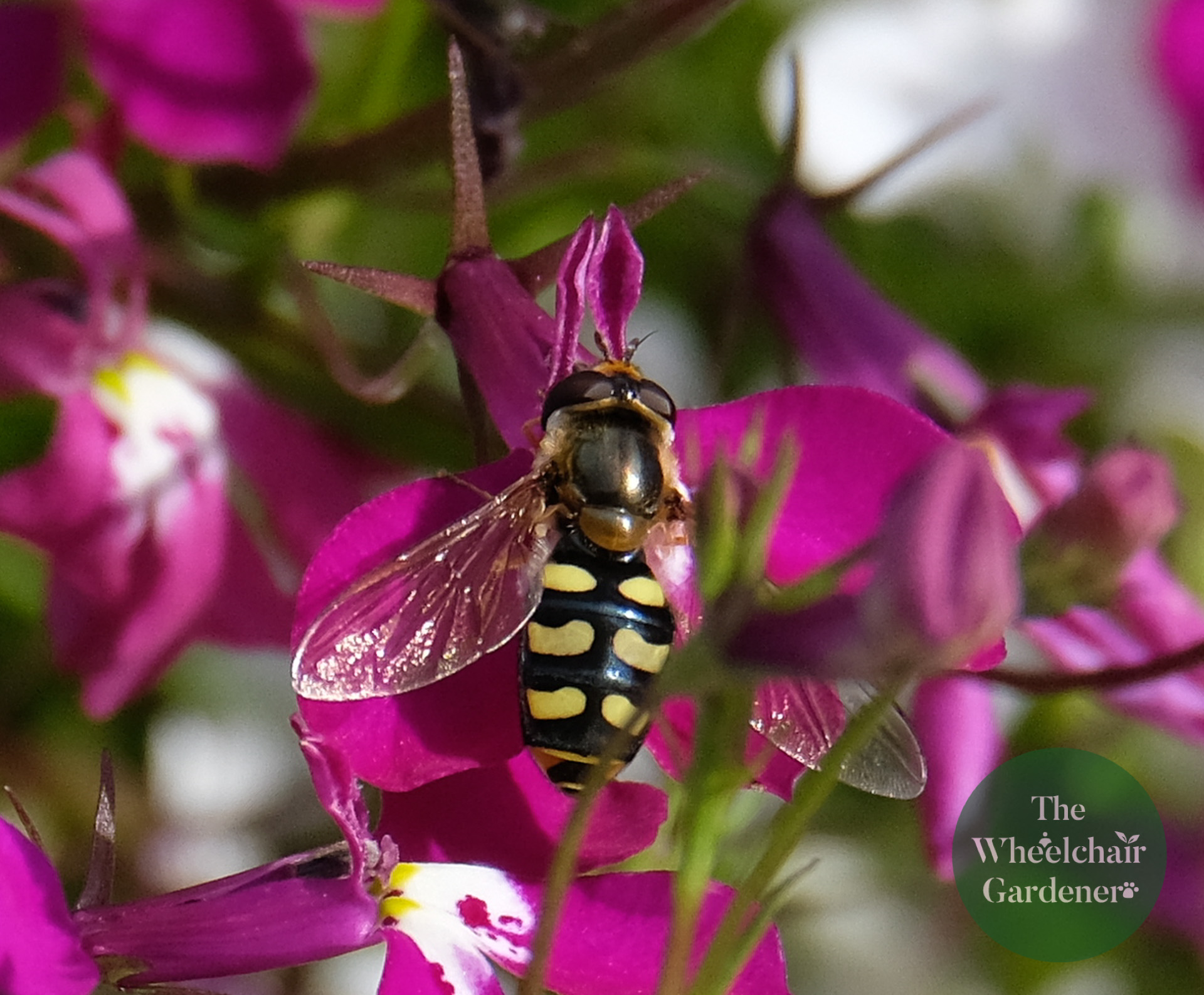
Probably even more overlooked than the solitary bees which at least occasionally get offered hotel accommodation ( often dubious and over-priced ) are the hoverflies. At first glance they can deceive you into thinking they are wasps or bees. They are great mimics. There are at least 283 identified species in the British Isles . When you focus in them they are constantly visiting flowers hence an alternative name of Flowerfly.
Gardeners tend to regard them as friends in the garden because the larvae like scoffing aphids but a couple of species larvae like tucking into daffodil and other bulbs. With great originality they are known as the Greater and Lesser Bulb Flies but most species have only been given Latin names.
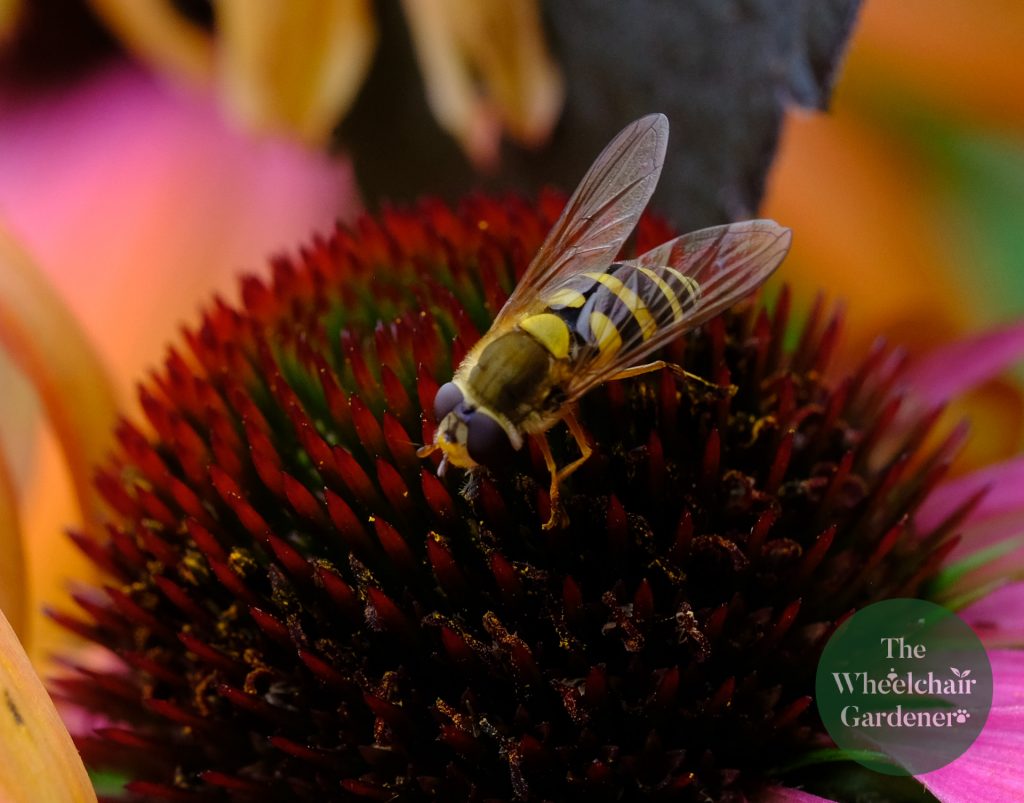
They are true flies with their family Syrphidae being part of the Diptera order because they have one pair of wings with a small club like appendage just behind known as the haltere, which enables them to fly like hummingbirds. They are aerial acrobats compared to many bees. Bees and wasps have two pairs of wings.
Hoverfly species can be hard to identify and the adult flying insect we see has a short life from just days stretching only to a few weeks at the longest. In this short adult phase they mate, disperse and lay eggs. Eggs hatch after a few days and it is in the larval stage where most of their lives and the year are spent eating various foods from aphids, ant and bee larvae, sap, rotting wood and decaying organic matter, before pupating for weeks or months then to emerge ready to fly .
Like so many insects they give strong clues as to the health of the environment because they are short-lived and fast breeding so respond quickly to changes. In the garden they are indicators of the health of the garden . A garden without hoverflies is not a garden I would want to be in. I want to hear the hover of Hoverflies and not just the buzzing of bees.