
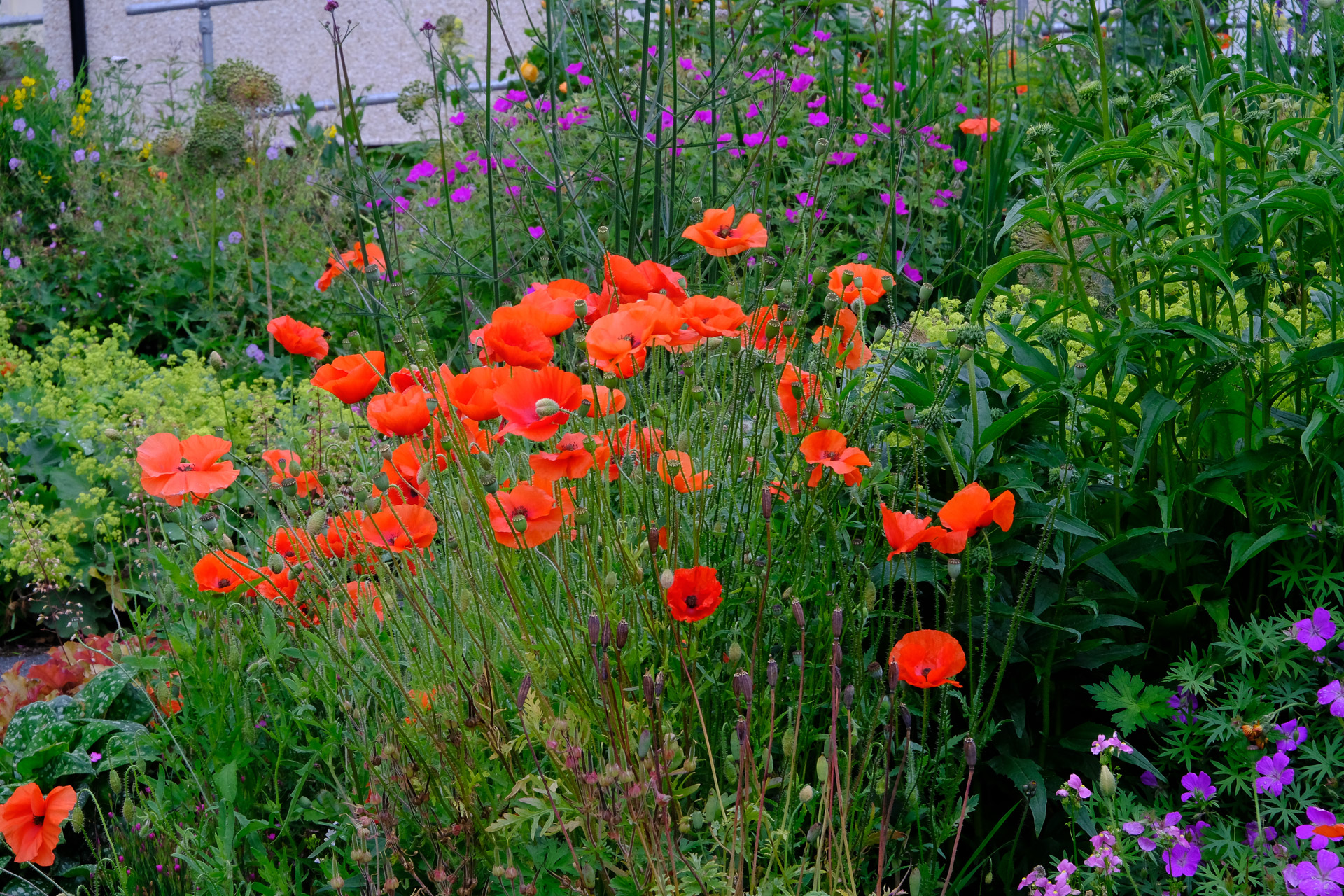
An outdoor public space does not have to be a municipal monochrome of sometimes mowed grass, limited in colour, life and imagination. It can be colourful, diverse and full with life that reflects its local environment and the people living within it. The aim of the garden is to recognise the space as a shared common resource and to encourage plants, whether cultivar or native to grow alongside other wild life and ourselves. In a world increasingly depleted of nature it is an attempt to reimagine the way we can use our outdoor spaces, no matter the size.
But I would argue that gardens are not an opposite of wildness and that paradise is not in conflict with wilderness. The truest gardening weaves the way of the wild within it – the will of of nature and the will of humans not in conflict but in coooperation. The most beautiful gardens are not expressions of hatred for wilderness, rather, they are a cultivated wild, deeply cultured.
It is one of the sweetest expressions of humanity, wild nature nurtured by hard work, a place where culture is enrooted with cultivation and care.
Jay Griffiths, Wild.

Setting the Scene
When I first moved in to the council flat it was a square blank cardboard box and for a number of years I sat from the inside looking out onto a green monotone of grass. I decided for a number of reasons but largely for my sanity that I needed to improve the view and find productive things to do with my time. I also felt indebted for all the help that I was receiving and it was a way of giving something back, a form of gratitude or in Swahili, asante sana.
Frank Lloyd Wright once said, ‘A doctor can bury his mistakes, but an architect can only advise his clients to plant a Virginia creeper’. This kind of sums up in a slightly more poetic way my attitude which is slightly more rustic, it was a question of polishing a turd.
I had spent more than 25 years living and working in central Africa running my own business, so arriving in mid-Wales to live in a council flat had been something of an unwelcome shock and surprise. It was only after a period of some years I came to realise that I would not be returning nor moving to any other place probably for the rest of my life. The decision to enhance and improve where I lived became a big priority and has been a major force in helping me to deal with paralysis from my spinal-cord injury.
In the beginning I had just put in a few plants along the side of my front door path, that I had bought from a retail garden centre for a relatively expensive price. I decided that if I was going to do it on any kind of scale with the budget that I had, I needed to use some of my business and practical experience of life in Africa to get the most value for what I had. So I started growing things from seed, digging up plants from other peoples gardens and buying plants wholesale.
The idea was to find out whether a Welsh council garden could provide a rich wildlife habitat and also provide the kind of visual aesthetic that most people expect from a garden where the plants are marshalled around simply to provide visual satisfaction or eye-candy.
Since around 1980 there has been a fashion and growing appreciation for ‘wildlife gardening’ which has largely been interpreted as emulating the countryside. Wildlife gardeners put in a lot of time and effort into building and creating wildlife meadows, ponds, bug and hedgehog hotels, bird boxes etc. Very often the idea is to attract a single species of mammal or bird, or to attract a certain group of insects like butterflies and bees.
The attempt here is to have both a productive and aesthetically pleasing garden, combined with a diverse and rich wildlife habitat in a relatively small and fragmented outdoor space. If all the suburban gardens in Britain are combined they provide a vital nature reserve which is often ignored or unknown.

Garden Habitats
The Stump Section
The stump patch is a small piece of ground right in front of the room which I lie to think of as my office, where I try to do something productive, and where I have my wooden standing frame , the last vestige of a bipedal lifestyle. The remains of a large tree of unknown type lie immediately before my view with the old stump and roots remaining just above the soil. The Front Patch
The Front Decking
The Community Patch
The Pond
The mini Orchard
The Vegetable Patch
Plants
Cultivated Species
Native Species
Grasses
Flowerless Plants
Fungi
Vertebrates
Amphibians
Birds
Mammals
Invertebrates
Insects
Moths
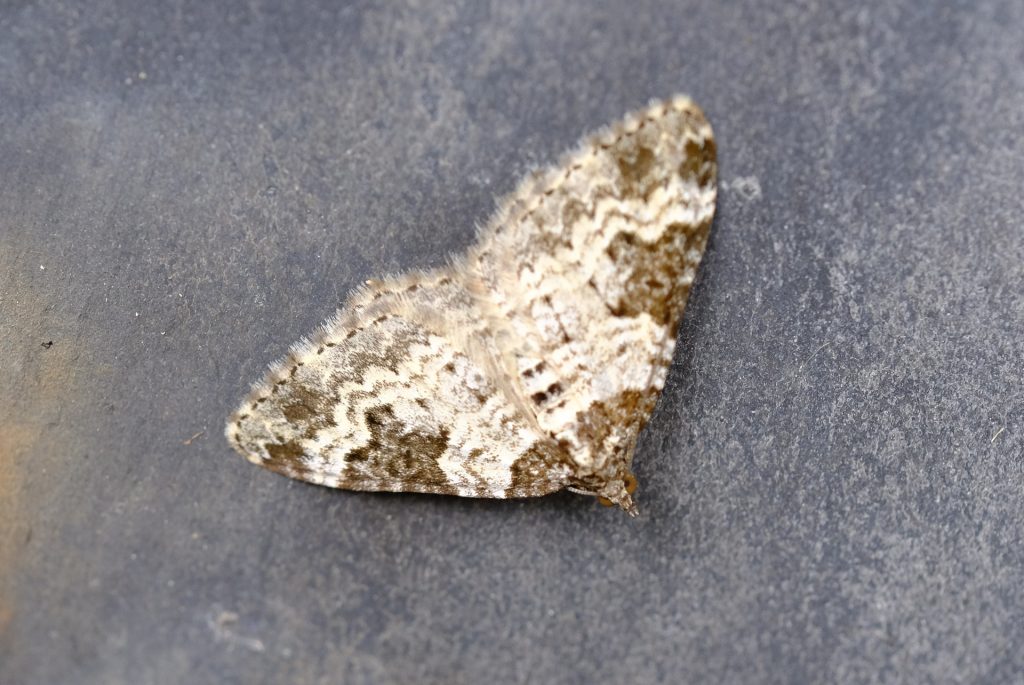
Garden carpet – Xanthorhoe fluctuata


Bees and wasps


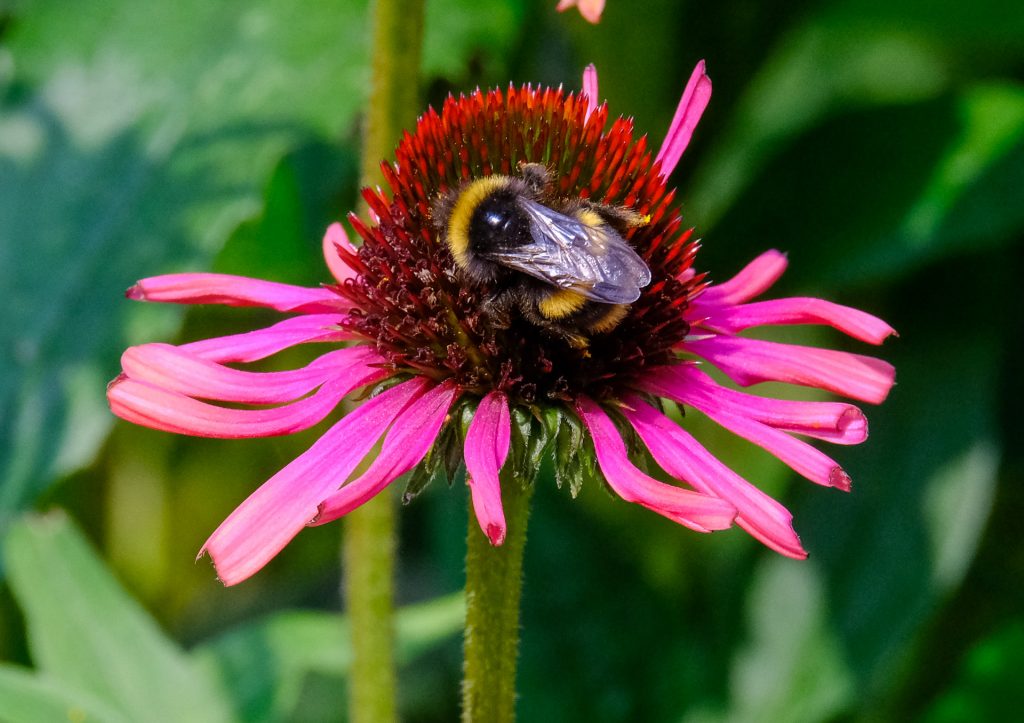
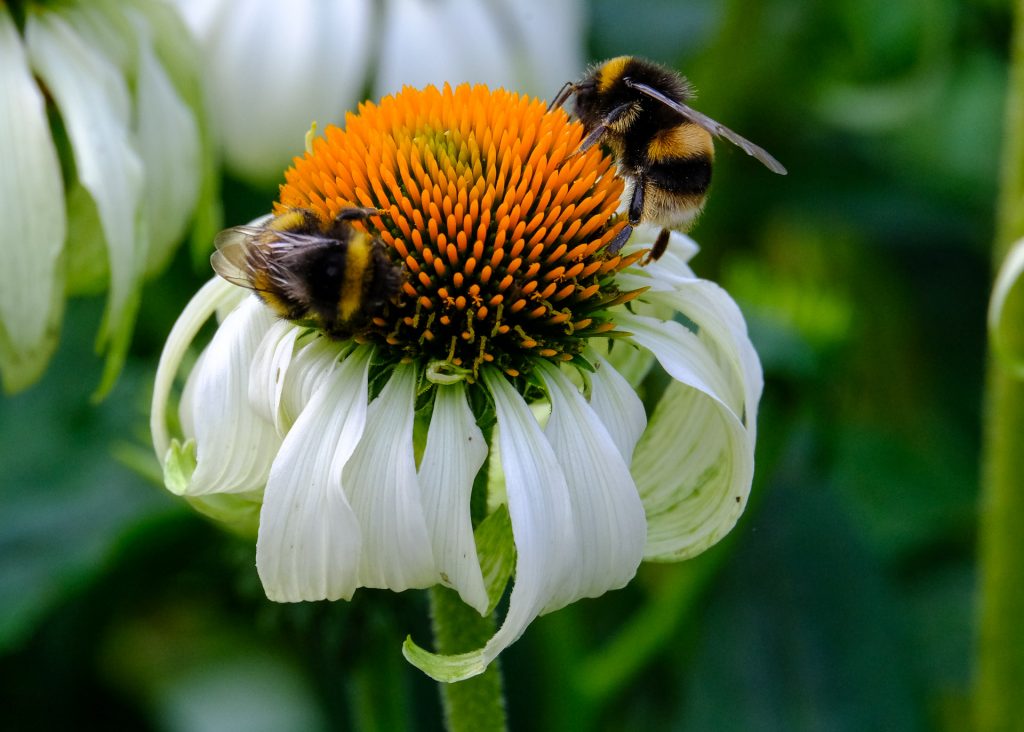
Sawflies, psocids, bugs and lacewings

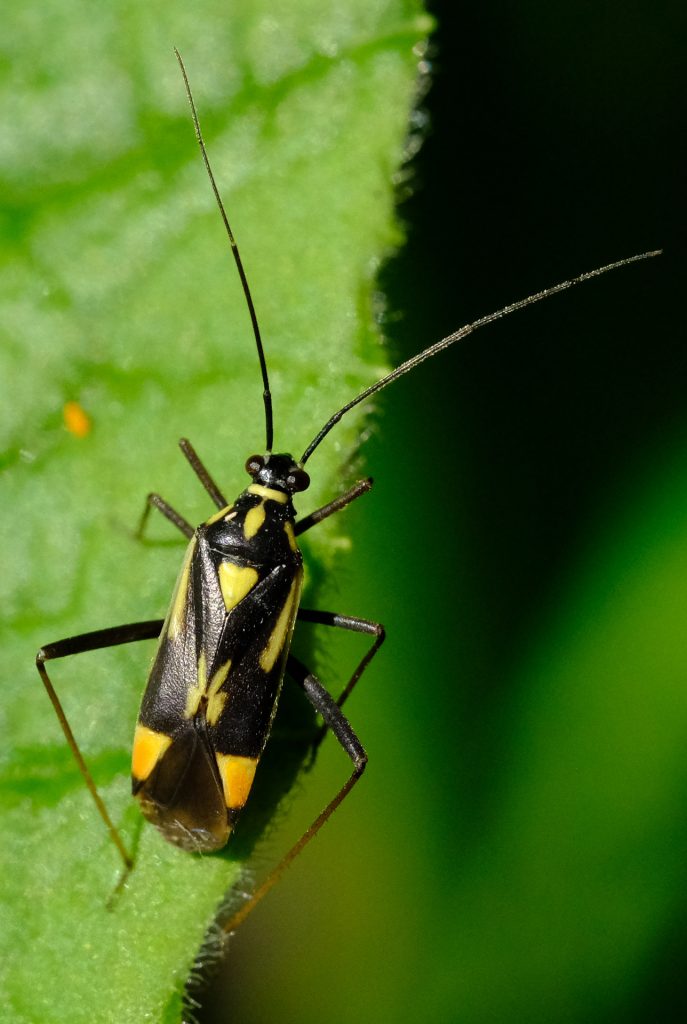
Plant bug – Grypocoris stysii 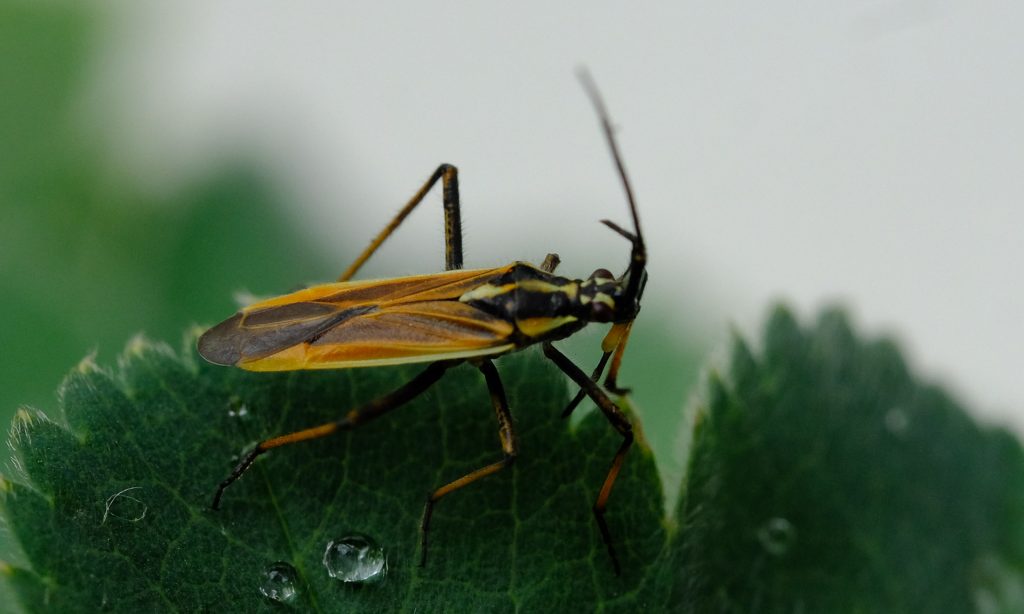
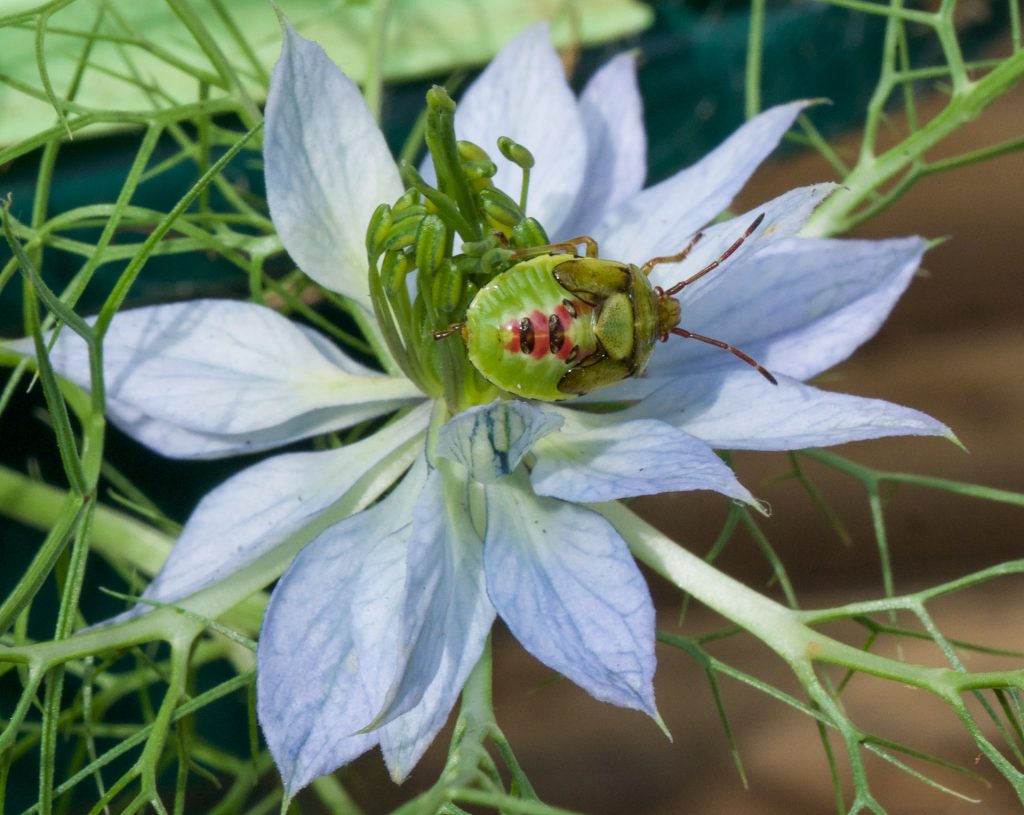
Green Shield bug ( juv) – Palomina prasena 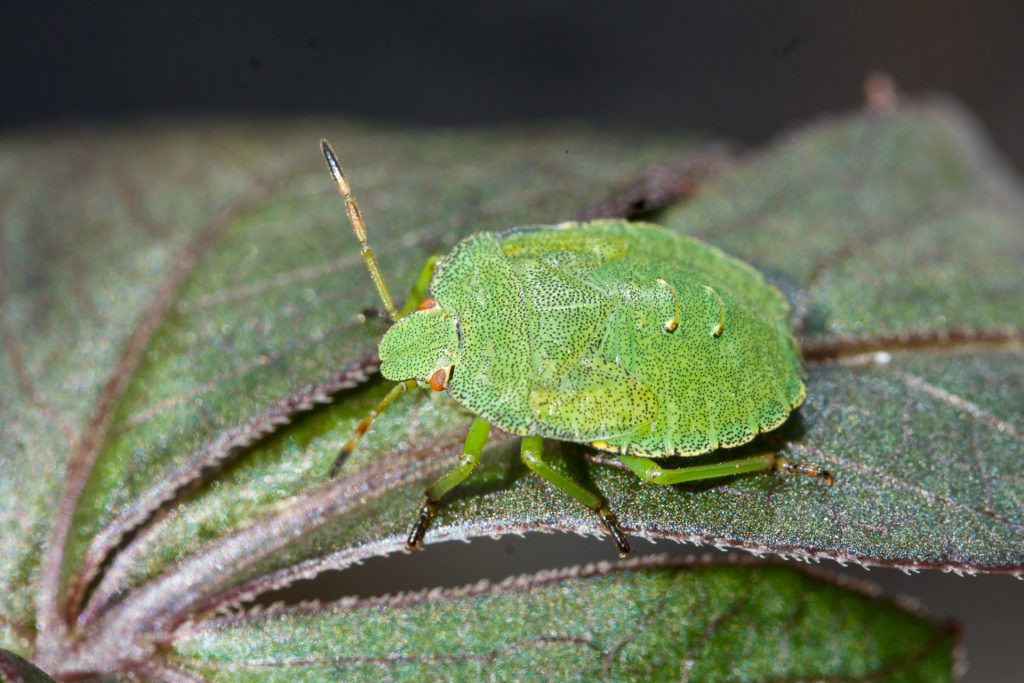
Green Shield bug – Palomina prasena
Beetles
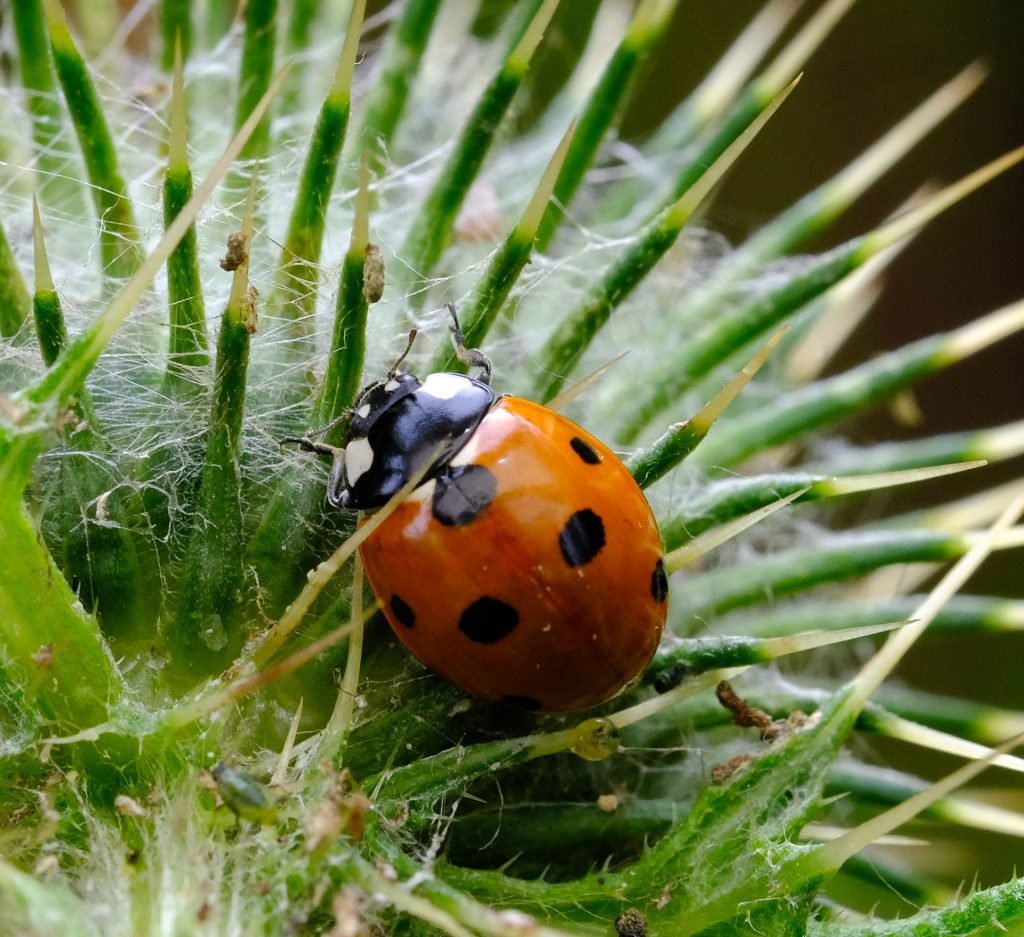
7 Spot Ladybird – Cochinella 7 punctata 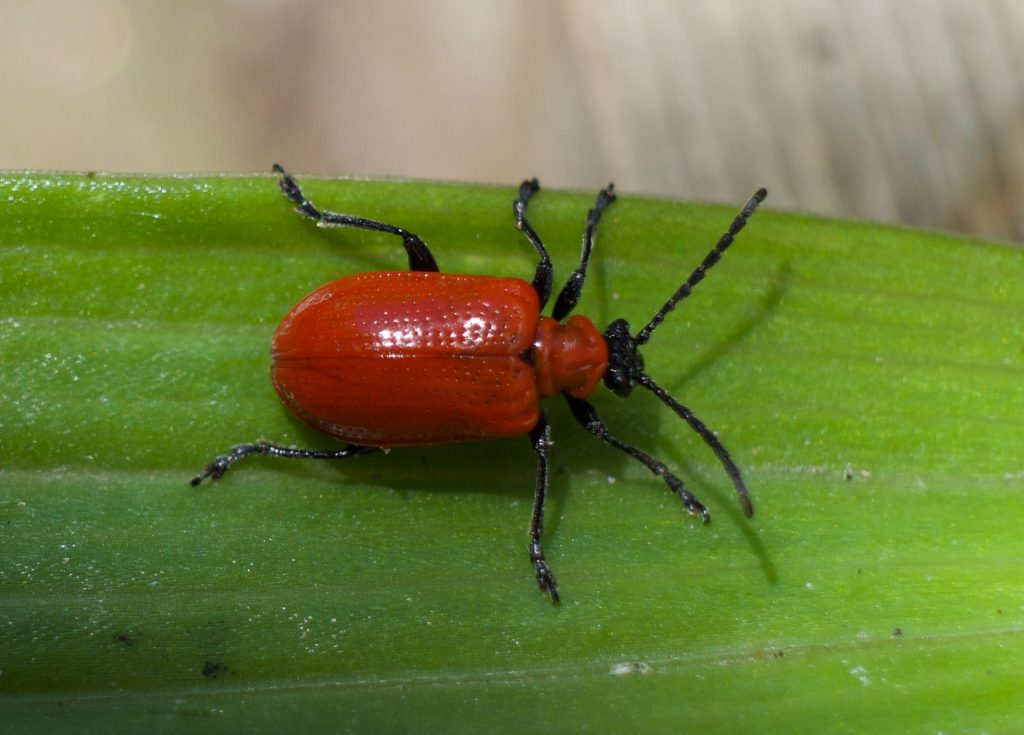
Lily Bettle – Lilioceris lilii 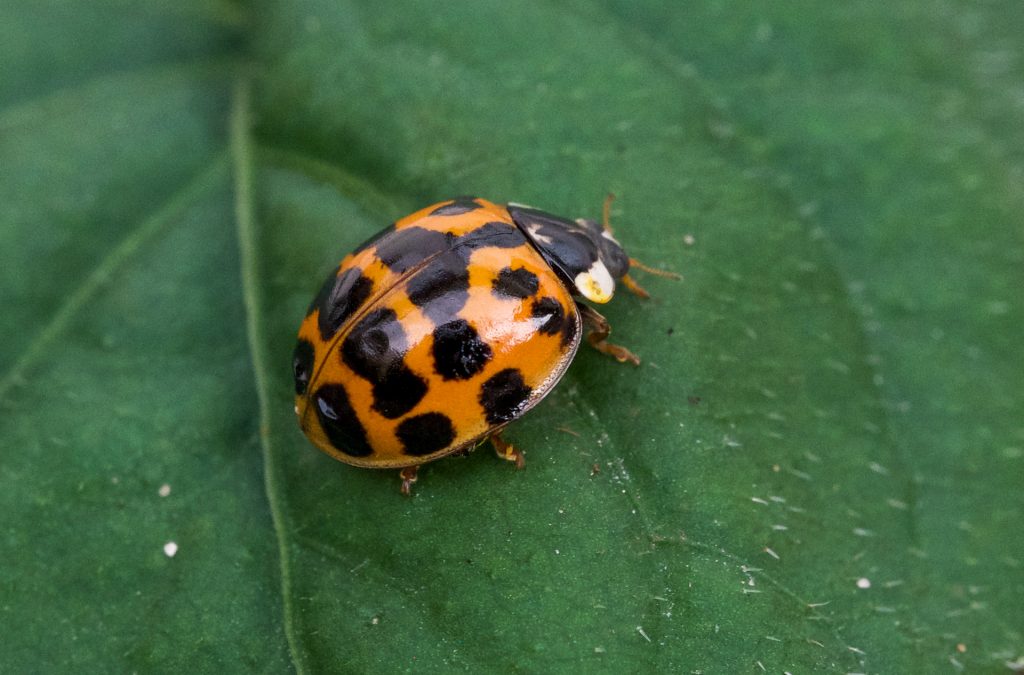
Harlequin Ladybird – Harmonia axyridis 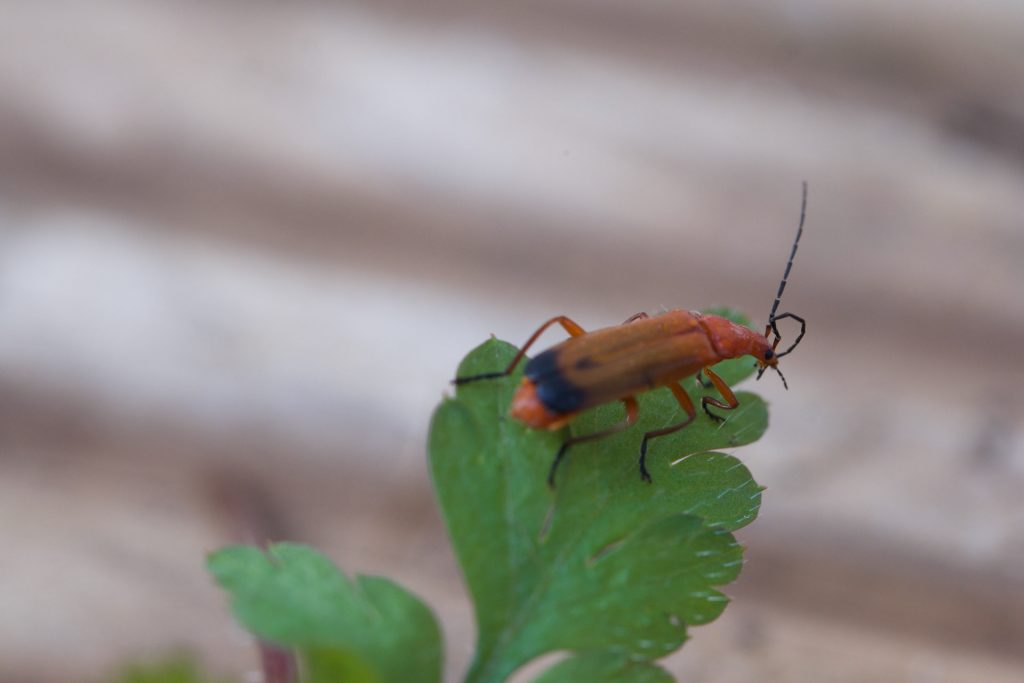
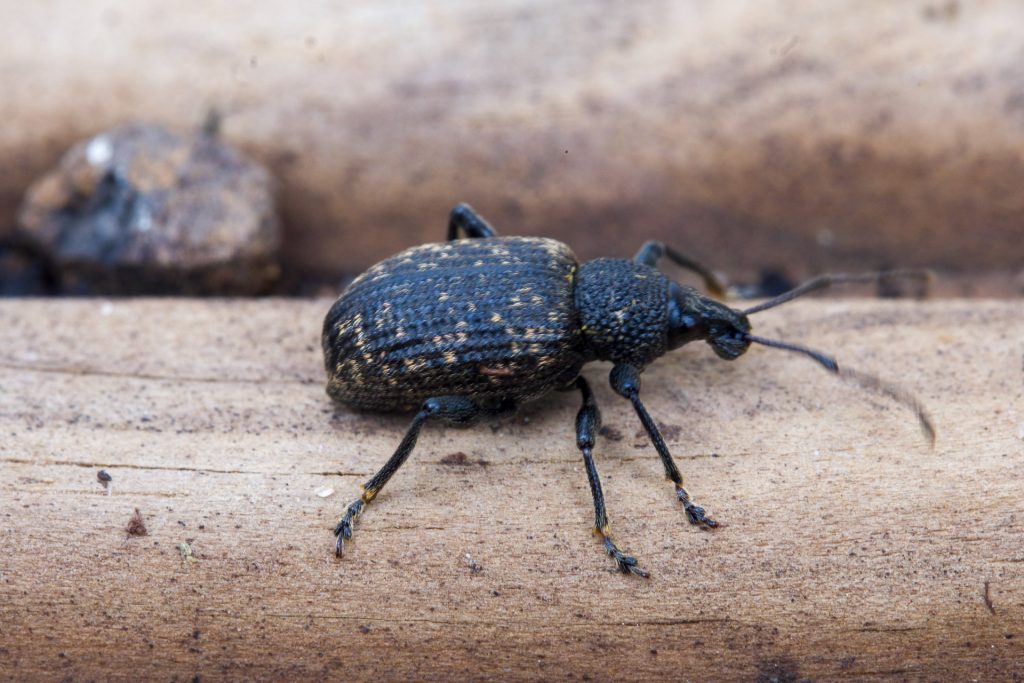
Vine weevil – Otiorhynchus sulcatus
Other insects
Other invertebrates
Flatworms
Snails and slugs
Earthworms
Woodlice
Centipedes and millipedes
Harvestman
Spiders