

“Her lyrical writing rendered her not a mere translator of the natural world, but an alchemist transmuting the steel of science into the gold of wonder.
Maria Popova of Rachel Carson
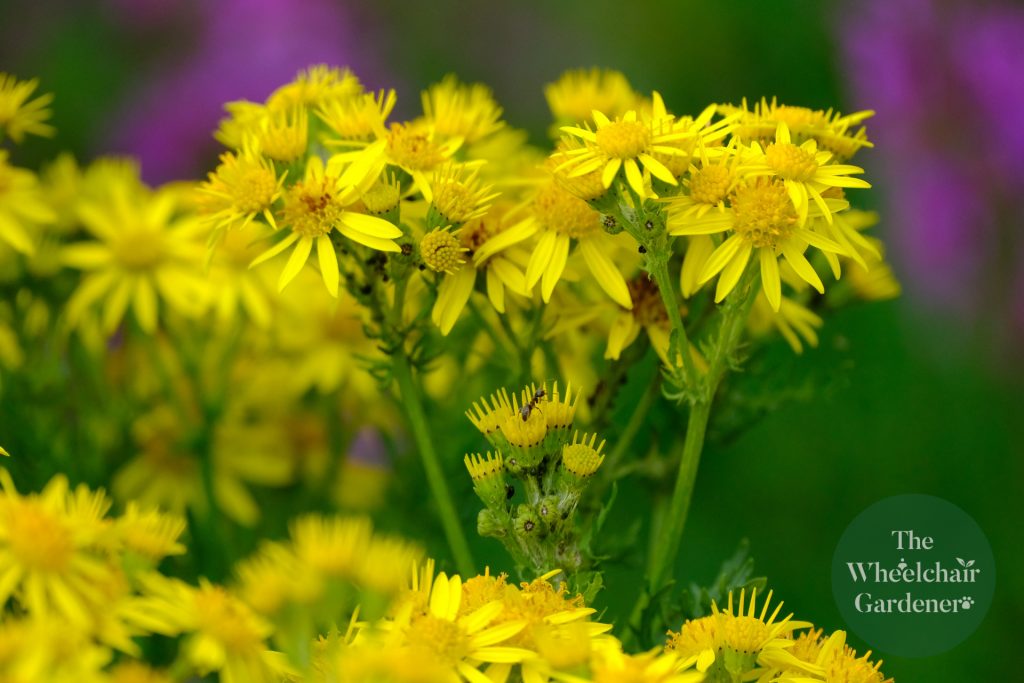
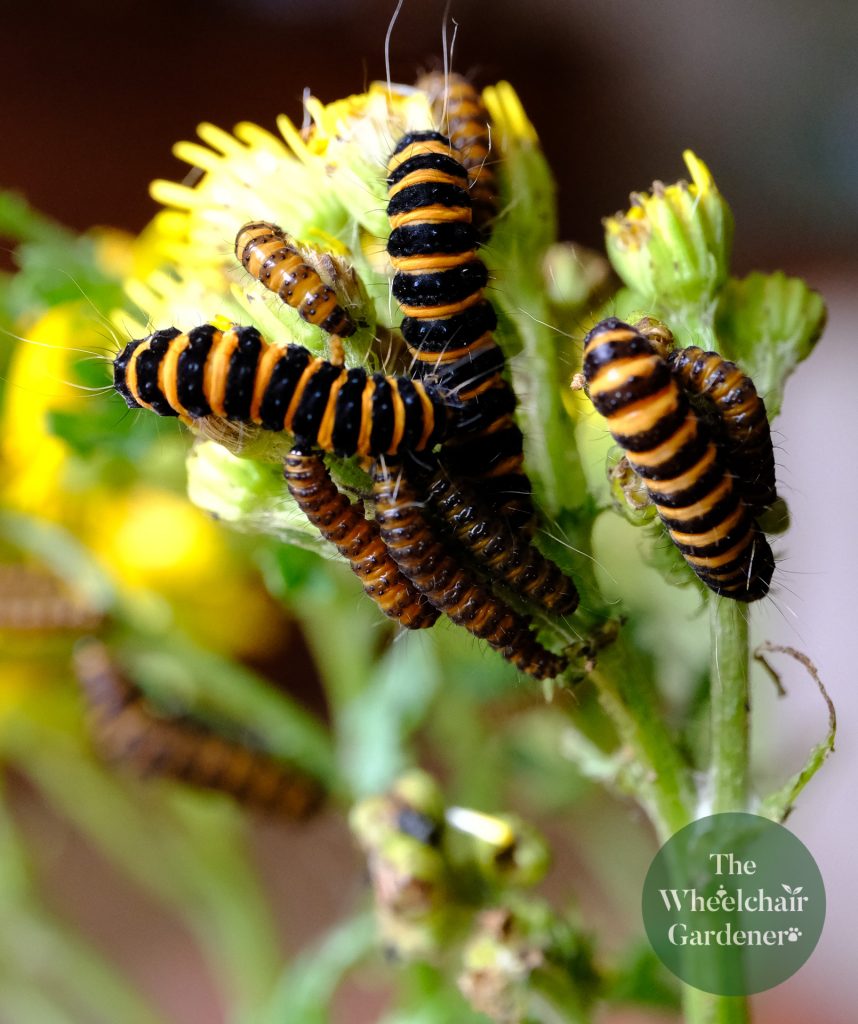
During the summer months over the past few years, when I have been out and about with Yazoo on our local meanderings I have kept an eye out for signs of the Cinnabar Moth caterpillar. It is relatively easy to see because it is like a tiny, wrinkled, tangerine and charcoal striped sock and more easily spotted than the adult moth, so it a simple way of roughly estimating their abundance where we know insects are increasingly in dramatic decline. It feeds almost entirely on what is probably the most vilified plant in the British Isles, Common Ragwort. I have come across disturbingly few caterpillars despite a reasonable scattering of ragwort, which is brightly coloured so easily visible with their lemon coloured flowers packing a punch which is hard to ignore.
Last year around late June, I found a lone ragwort alongside a small road in town and I decided to move the dozen or so caterpillars to a ragwort plant growing in the wild patch in the middle of the surrounding flats where I live. The next day it seemed like an act of clairvoyance as I discovered the sole ragwort minced to pieces by a council strimmer. It would seem Cinnabar moths do not make a risk assessment when choosing the most suitable location to lay their eggs.
Two Saturday’s past a similar thing happened, when I noticed a few ragwort plants behind County Hall, which is rarely visited despite being a scenic, safe and tranquil area. On the Sunday, I had decided to move the 20 or so caterpillars I had spotted but had no safe spot to easily move them to, that I could access in my chair. So I set up a little caterpillar nursery with some ragwort stalks stuffed into small terracotta pots filled with compost and then placed these inside a clear plastic box with tiny holes drilled into the plastic lid for air to circulate. On Monday, when I went to check the same area, lo and behold, parked there was a white Council pickup van and a fluorescent-jacketed council worker with safety helmet and goggles, wielding the weapon of destruction and busily dicing through the variety of plants that had been quietly growing, no doubt glad of all the recent rain and not a hindrance to a single soul.

I got to wondering why it might be that ragwort has been singled out and vilified in the way that it most clearly has from all the other plants found within the British Isles flora, which comprise around 3,500 species. How could ragwort have caused the legislative and chemical attention that it has, and what real evidence exists to support this?
In 1959 The Weeds Act was passed which concerns the control of certain plants deemed harmful to agriculture and preserved powers from The Corn Production Act 1917. The act in Section 1(1) states: “Where the Minister of Agriculture, Fisheries and Food (in this Act referred to as ” the Minister “) is satisfied that there are injurious weeds to which this Act applies growing upon any land he may serve upon the occupier of the land a notice in writing requiring him, within the time specified in the notice, to take such action as may be necessary to prevent the weeds from spreading.” It received royal assent on 16 July 1959. It was not debated and it would seem that the injurious harm that might be caused had been highlighted in pre-industrial agricultural practices. It was only deemed injurious to agriculture and certain livestock whilst not dangerous to humans.
Ragwort (Senecio jacobaea now Jacobeae vulgaris) was joined by four other plants in this list of countryside villains, namely , Broad leaved Dock (Rumex obtusifolius), Curled Dock (Rumex crispus), and Creeping Thistle (Cirsium arvense). It was almost as if following the end of both the First and Second World Wars Britain was searching for new enemies to fight and turned to the countryside.
This not as absurd as it may seem when you look at the origins of the big chemical companies, such as Dupont, that had come into existence and grown as a result of the wars and had to redeploy and repurpose their businesses as the wars ceased. The 1st WW was known as the chemical war with gas and other chemical weapons such as DDT being discovered and developed. The 2nd WW saw the advent of the nuclear age and in the US military funding was used to fund science after the war to develop pesticides. Wars make money creating jobs, revenue and profits as well as destroying lives.
The desire to destroy targets in the natural world meant strongly opposing Rachel Carson’s ground breaking work starting in the 1940’s about the impacts of synthetic pesticides on both human health and the wider natural world. Her book, ‘Silent Spring’, published in September 1962, which exposed the human and wider environmental impacts of the widespread and frequently indiscriminate use of DDT and other synthetic chemicals. It received fierce opposition. It was calling for an examination of the whole paradigm of scientific progress, and what that actually meant, to the US and wider world emerging from the war. Robert White-Stevens, (a biochemist working for American Cyanamid) sought to instil fear with his rhetoric, “If man were to follow the teachings of Miss Carson we would return to the Dark Ages, and the insects and diseases and vermin world would once again inherit the earth”, as well as “a fanatic defender of the cult of the balance of nature”. She was also accused of being a ‘communist’ in a letter to President Eisenhower. Eventually her work did lead to the formation of the US Environmental Protection Agency which is currently under political assault.
Plants are an easy target, they just have be identified and a case made for their negative impacts on agricultural production and yields, given the need to grow food in the UK’s drive for self-sufficiency. It makes good business sense to identify strong abundant plants, develop a case against them or reinforce an existing one, and a steady income stream follows developing and then selling products to destroy them. A whole new world of business opportunities opened up as the industrialised chemical including fertilisers) and pesticide industries expanded on a global scale. If the target species develops resistance this can be an advantage because it means new products to research, develop and then sell. The case against the plants has to be kept simmering away quietly. Strangely plants are not able to make a case for their own survival but their continued existence heightens the urge to destroy them. If wars can be won against other nations, it is an affront to think simple plants and insects are able resist the assault waged by man to control them..
Ragwort emerged as the ringleader from the original gang of five, when in 2003 The Ragwort Control Act arrived creating a code of practice. Neither act made ragwort control compulsory, rather an implication of the automatic legal responsibility and need to control the plant.
Sixty-four years after the Weeds Act was passed the assault against ragwort seems to now be culturally ingrained, judging from the way they appear singled out by council workers, gardeners, farmers and the general public.
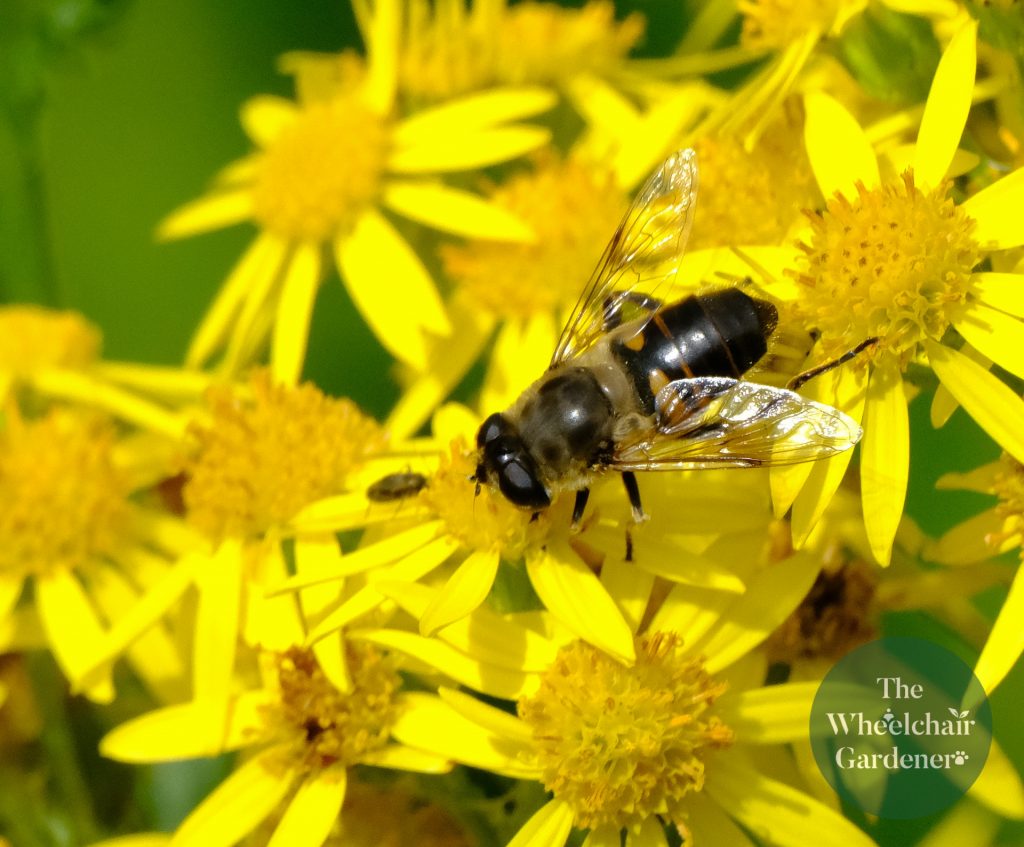
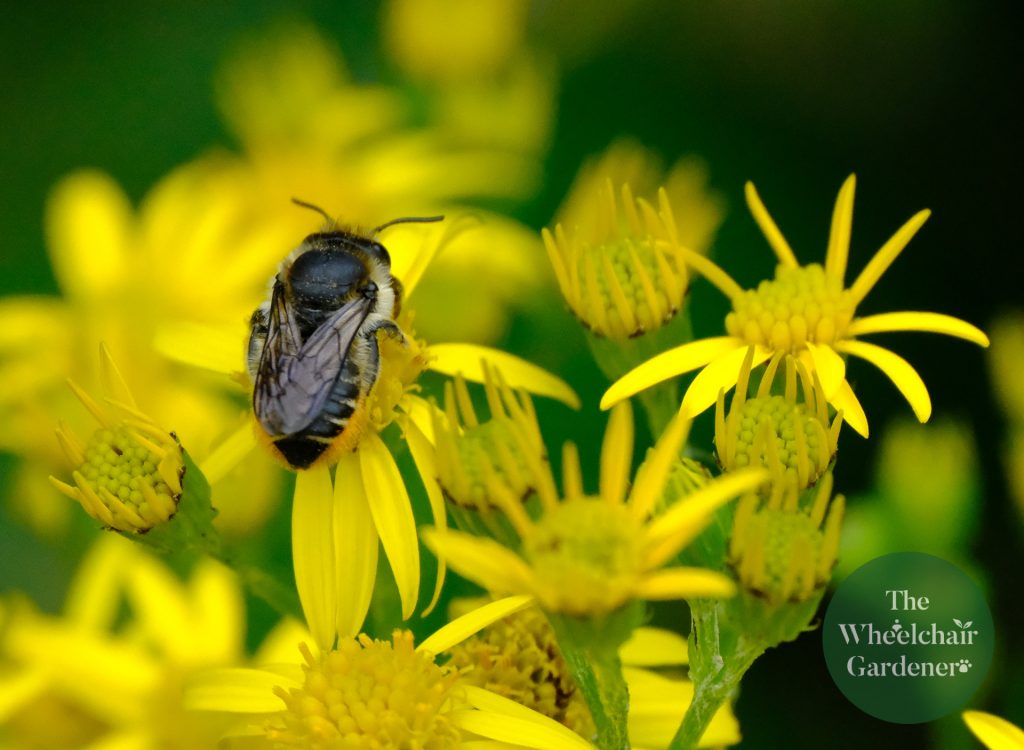

The evidence against ragwort is flimsy where it might be imagined that the countryside had been piled high with the rotting corpses of cattle and horses, sufficient enough to justify the attention, time and effort of the Parliamentary scrutiny in the first place. The charge sheet includes the following: it is extremely toxic; it is an invasive species; it is dangerous to humans, even poisonous to touch; there is so much of it is must be controlled, and finally minute amounts of pollen and/or seed can accumulate over time to pose a health threat. Today, most claims of poisoning seem to be made by the equine community, as horses are deemed the most susceptible to the cunning and wile of the toxic alkaloids of ragwort.
Finding any strong empirical evidence to support these claims is at best, patchy and dubious. In a field where ragwort is growing livestock avoids eating it, which makes sense, as herbivores were grazing in ecosystems alongside ragwort for millennia before humans embarked on their agricultural practices. So the threat was presumably perceived to be in hay where ragwort has been dried and then inadvertently consumed by the animal.
There is no specific test that can confirm ragwort poisoning, and the alkaloids within the plant are not confined to ragwort alone, many others contain the same chemicals, estimated to exist in around 3% of plants globally. Toxins from mould growing on livestock feedstuff can produce similar microscopic changes in the liver needed to diagnose and confirm poisoning. It is quite possible that no more than 1 case per annum actually occurs and the simple solution is to remove ragwort from hay meadows.
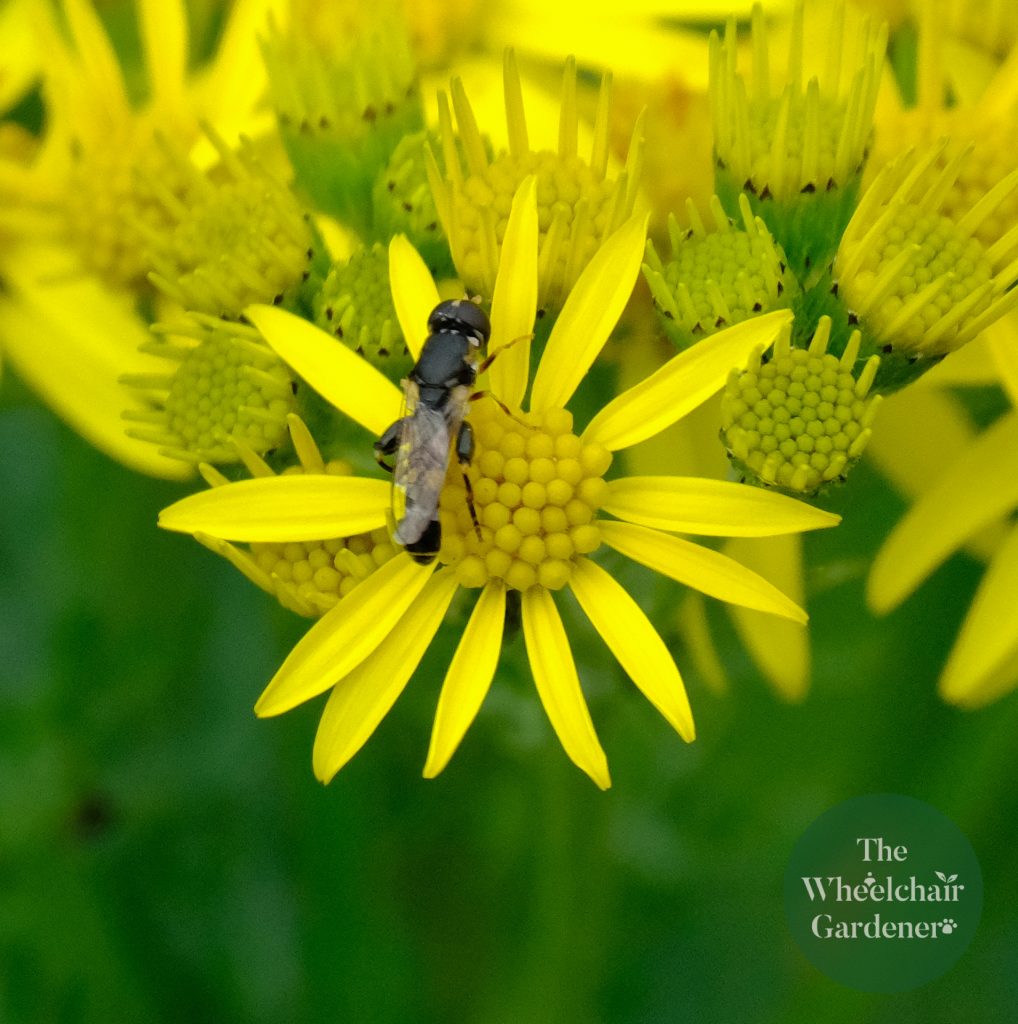
The positive case for ragwort would seem much stronger than any negative ones. 35 species of insect are directly reliant upon it, most noticeably the cinnabar moth along with six other moth species and seven beetle species. For 83 more species, including various bees and butterflies, ragwort provides a significant food source with another 50 species of parasite in turn, feeding on those. On the list of over 7,000 species (including cultivars), ragwort is vying for top-spot placing at seventh of the most important nectar producing plants according to surveys carried out by the Agriland Project.
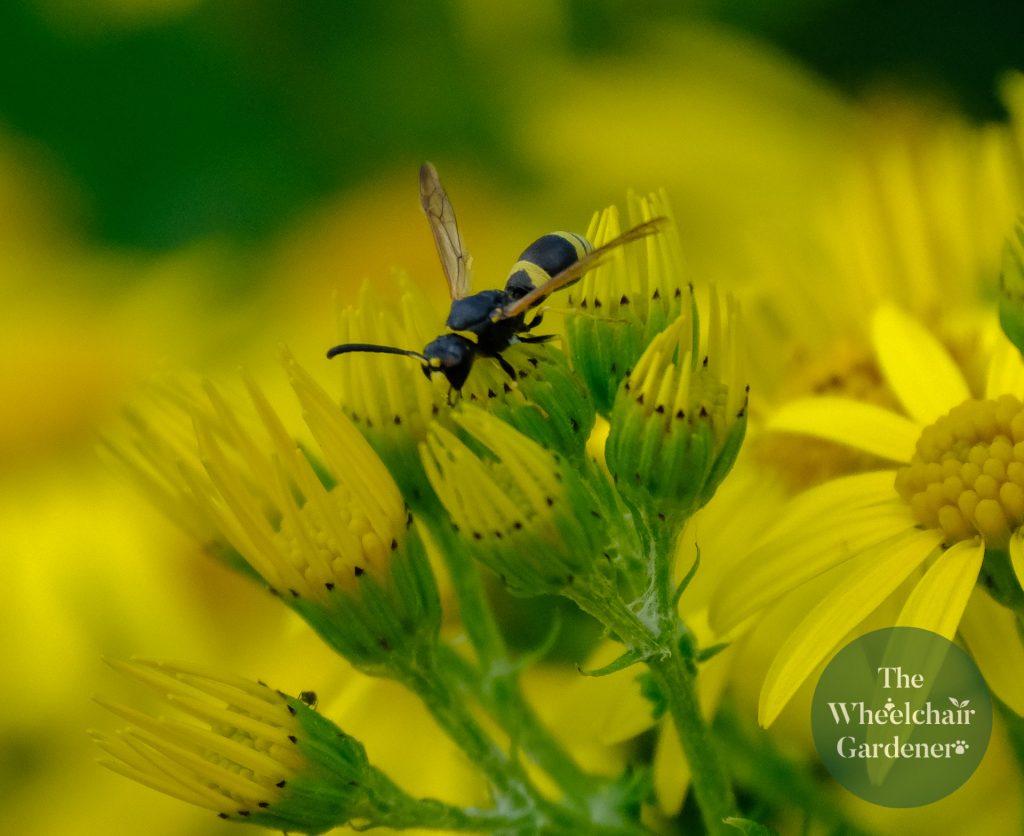
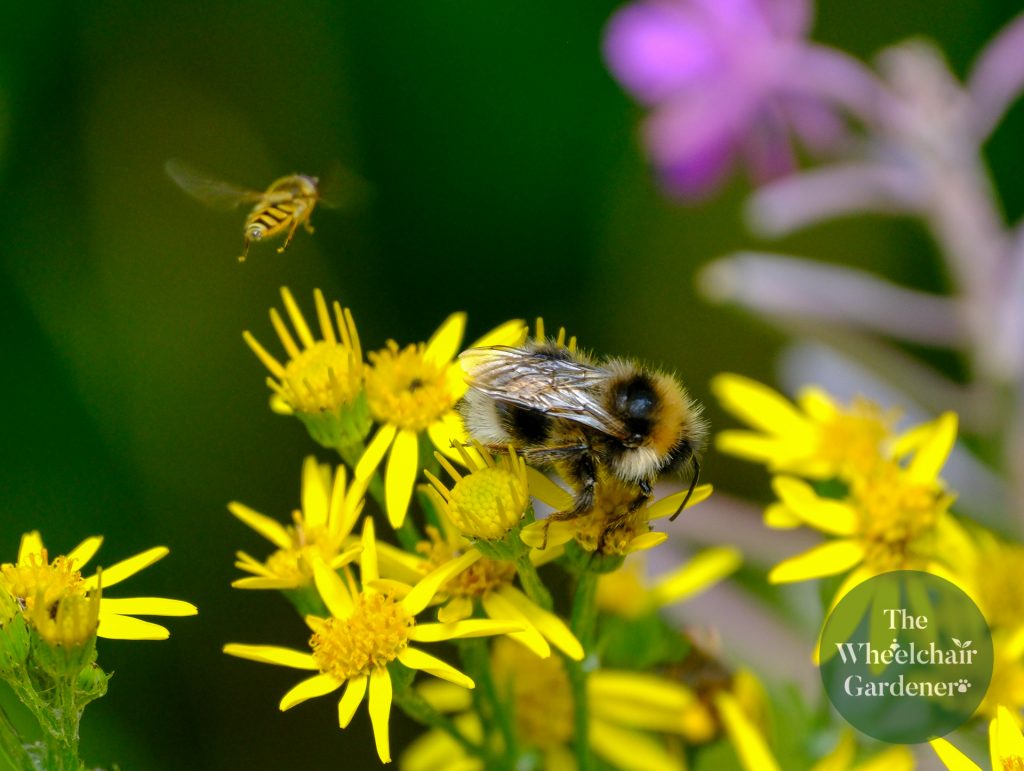

Ragwort is a member of the Asteracae family or Composites which is the second largest floral family in the UK after the grasses, and comprises plants like daisies, dandelions, marigolds and thistles. Aster cultivars are popular and widely sold in garden nurseries which would seem to make the common ragwort a severely misunderstood plant despite its many attributes. It is strong, looks attractive, flowers for months, supports many other species and it does not spread as easily as often claimed favouring bare ground.
Cinnabar moths, Tyria jacobaeae, get their name from the red mineral, cinnabar an ore of mercury. The sexes are similar with a slate black forewing and two red spots and pinky-red stripes, while the hindwing is reddish with a black border. These warning colours indicate to potential predators they will not make a tasty meal as they have absorbed toxic alkaloids from the ragwort. They fly by day as well as at night after having emerged from their months long underground pupation. From May in to July when each female will lay around 300 eggs, in batches of 30-60, on the underside of the hosts leaves, the caterpillars emerge, feed and then spin their cocoons in late summer to spend the winter and most of spring. Their numbers in the UK have declined dramatically over the past thirty-five years by over 80%.
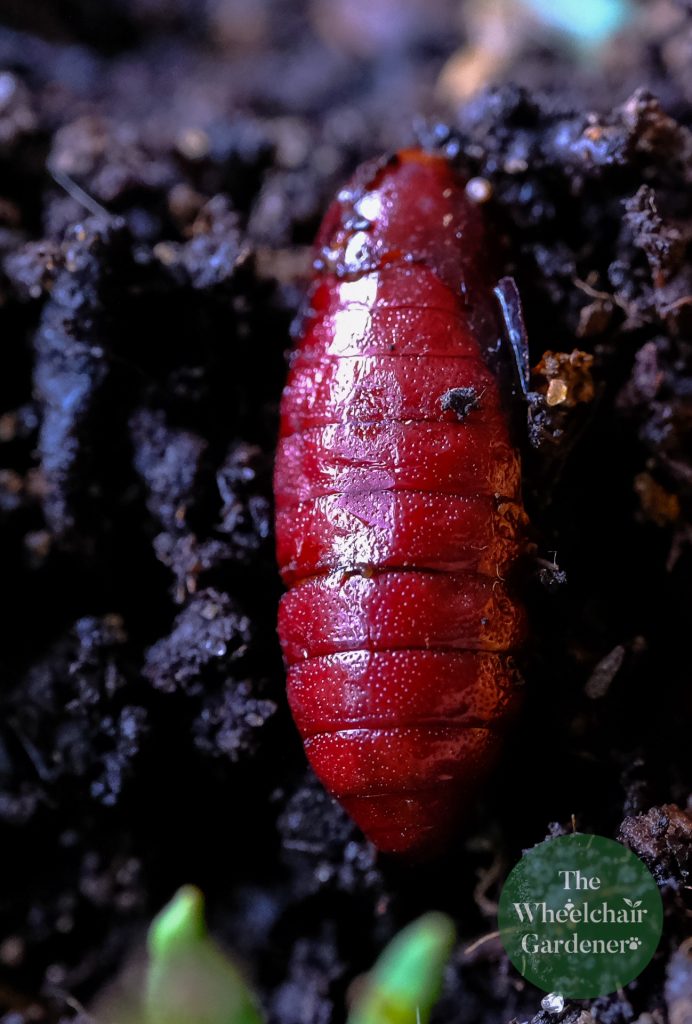
A fortnight after I had spotted the caterpillars, the daily offering of fresh ragwort seems to have paid off and the first 3 caterpillars have transformed into pupae. Now it’s a question of keeping them in the right conditions and hoping the adult moths emerge in the late spring. I am keeping my fingers crossed but I will be collecting some ragwort seed-heads to sow in the autumn. More power to the common ragwort I say, and something to hope and look forward towards next year. The simplest way to understand the benefits of the common ragwort is to just sit quietly observing one for five minutes on a warm sunny day and count the insects that arrive to feed on it, whether for its pollen, to predate other insects or to feed on the plant itself. It is a plant that gives life to lots of others and surely vastly more than it might take. The Common Ragwort is a hero.