
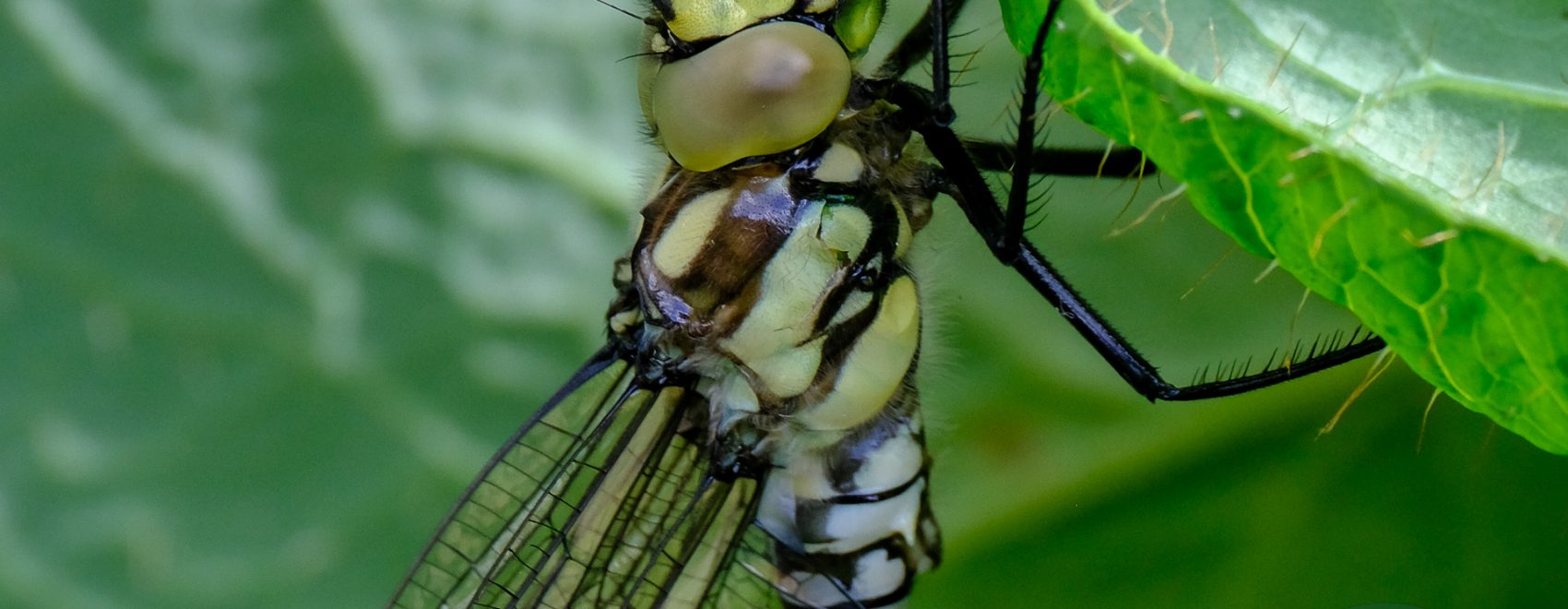
Two years ago, a couple of years after the pond was made and filled with water I happened to spot my first Southern Hawker in the garde, doing what a hawker does and busily zipping around the pond surrounds like a hawk in search of a meal.
The following year I actually witnessed a female carefully laying her eggs on a wooden log in the corner of the pond, the tip of her tail delicately searching for the best spot to position her scythe-like ovipositor into the rotting wood to release the small, elongate or endophytic, pale coloured eggs. After a few weeks these will have hatched and the small prolarvae enter into the water to moult within a few hours.
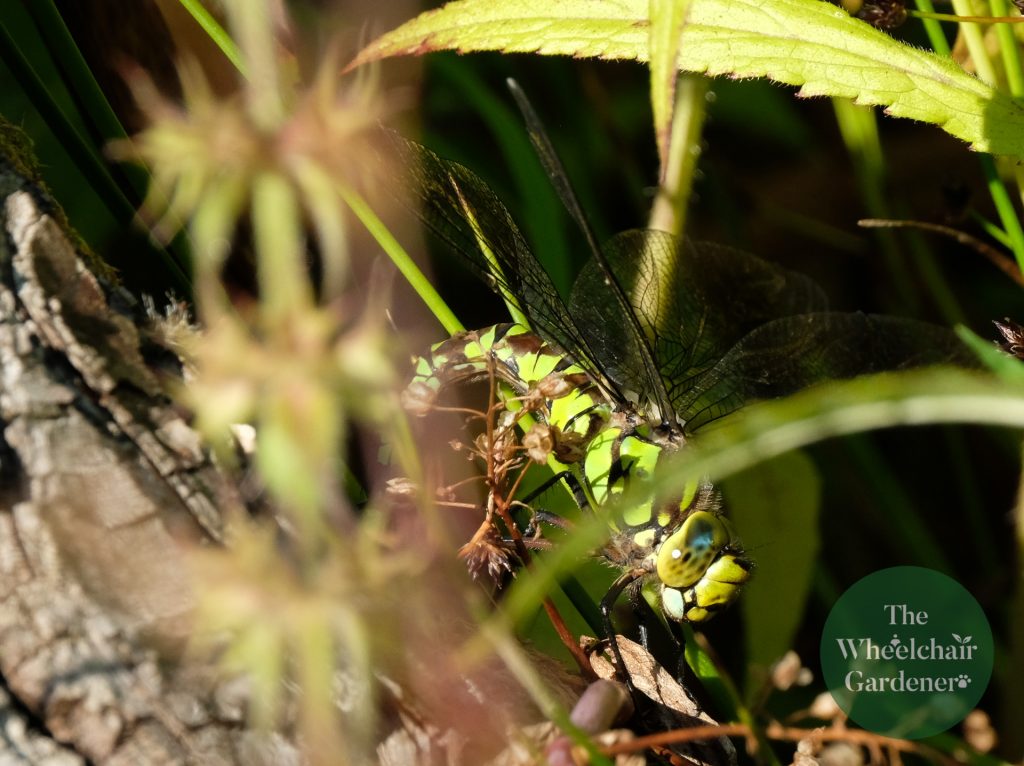
At the end of June I was sitting by the pond when I noticed the cast-off casing of a larvae, known as an exuvia, attached to a rush a few inches above the waters surface, with the exit hole clearly showing.

It was unlikely to have been one of the eggs laid by the female I had seen the year before as the larvae usually spend 2-3 years in the water, and judging by the speed the tadpoles have been disappearing, they have been well nourished.
It could have been the same Hawker I had first seen, but whatever the case it was rewarding to know that the pond was providing a home and a habitat for an increasing variety of life. I was happy just to have noticed the recently deserted shell but also wished that I had actually seen the whole emergent process take place as it is a dramatic transformation. They redistribute their body fluids, pushing the thorax, head, legs and wings out of the larval skin. After around half an hour their legs harden enough for the next stage when the abdomen is withdrawn. The wings, and then the abdomen, are expanded and start to harden. This whole process could have taken three hours.
He remained still enough to get pictures and I left to go inside for a quick bit of lunch and hoped to get some further pictures as the full colours appear, but it looked like it could be a male with the rarer blue colour patterning.
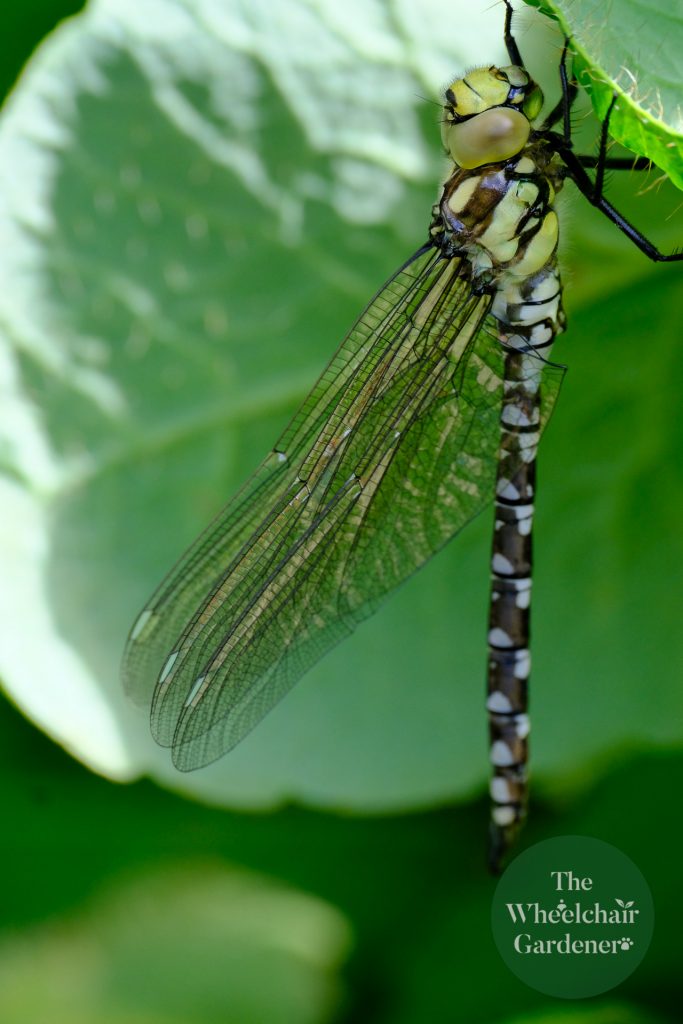
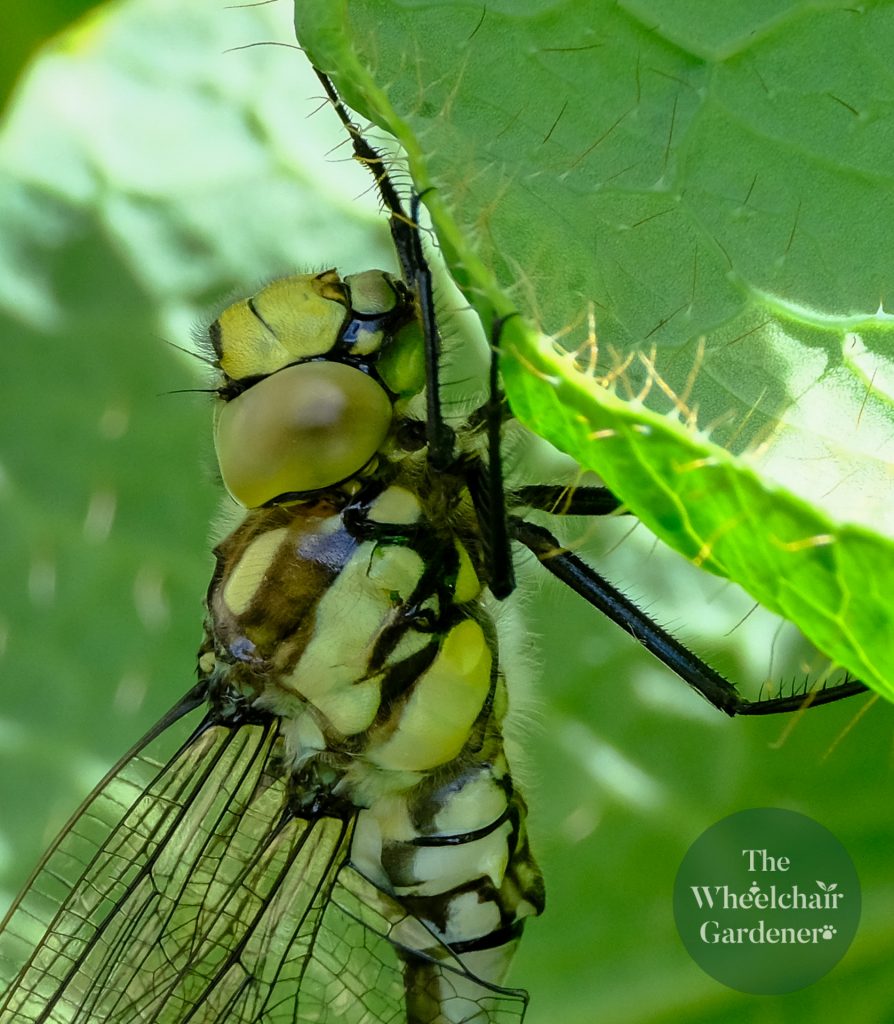
Two hours later when I went to check on the progress of the teneral, this newly emerged state, there was no sign and I guessed he had taken to the air. Or so I thought. Something shiny flashed into sight on the bare soil between the poppies and the runner beans. I looked more closely and lying there was a pair of delicate, gossamer thin wings, weighing virtually nothing but strong and supple nonetheless. They clearly belonged to a dragonfly, presumably a Southern Hawker, and they had been torn from the thorax.
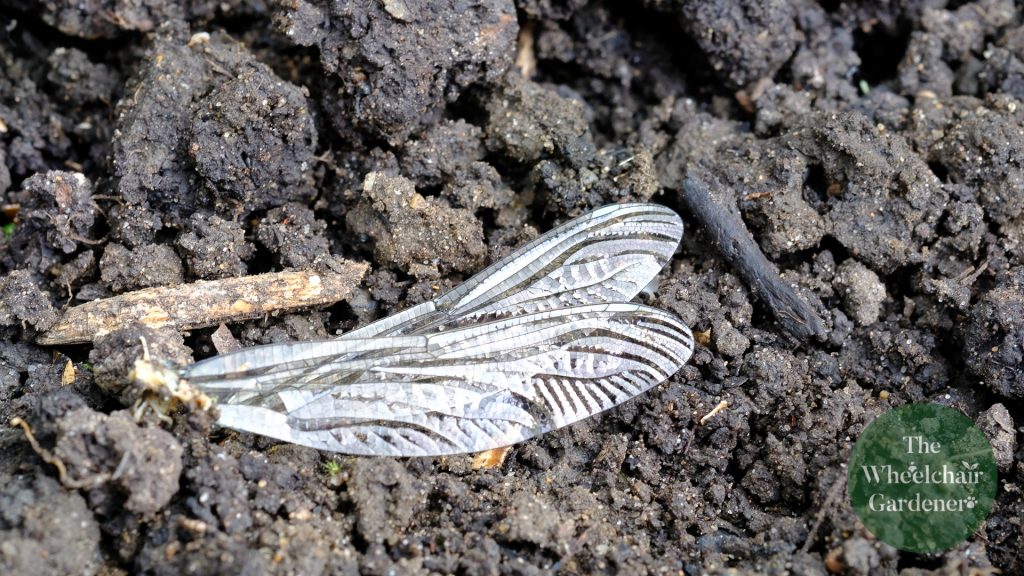
It seemed like wanton vandalism as this hawker had spent the entirety of his two or three aquatic years of life getting prepared for this momentous transition in order to fly, hunt , find a partner and breed, even if it was for a relatively short few weeks. It should have have been the climax and peak of his existence. Who had committed this brutal act I wondered?
At the top of my suspects list is one amongst the squadrons of constantly bickering, squabbling and shagging house Sparrows that consume more food from the feeders than all the other birds combined. I don’t mind them drinking and bathing in the pond but gobbling up dragonflies is stretching it too bloody far. Where on earth are the local Sparrowhawks? There are plenty of freely available ready meals around here.